Introduction
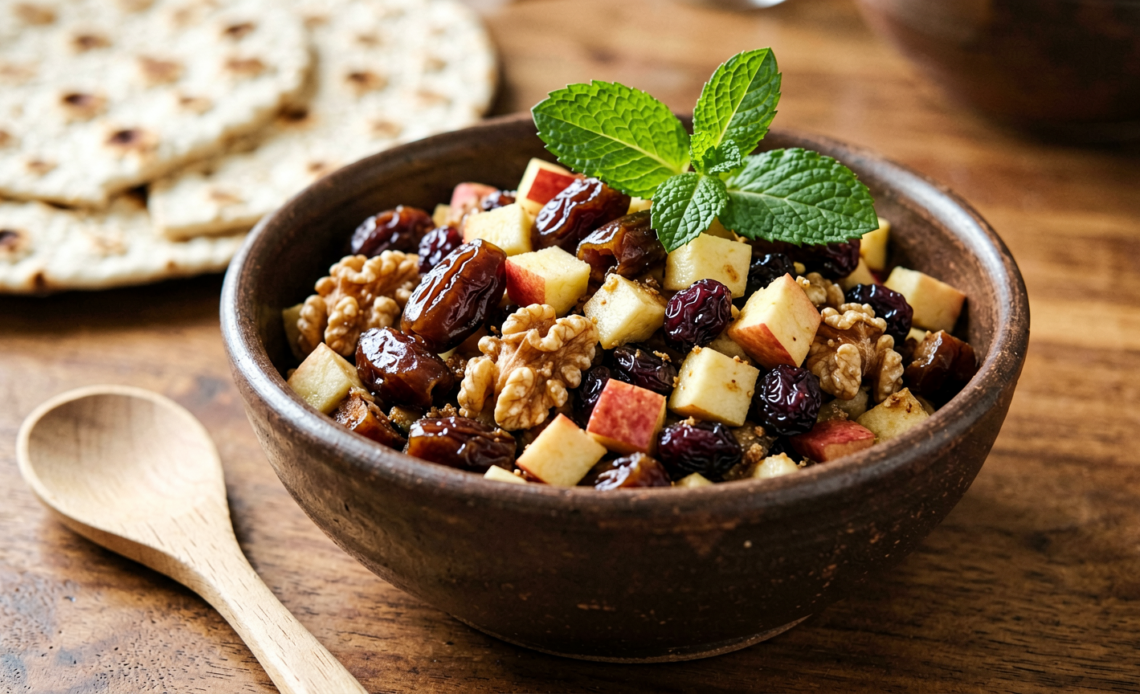
Passover is a time of remembrance, celebration, and, of course, delicious food! At the heart of the Seder plate lies Charoset, a symbolic mixture that represents the mortar used by the Israelites in ancient Egypt. But beyond its deep historical significance, Charoset is a surprisingly delightful treat – a sweet, nutty, and fruity paste that can be enjoyed in so many ways. This recipe brings you a classic, easy-to-make version that’s perfect for your family’s Seder table.
Recommended Kitchen Tools
To make this recipe easier and more efficient, here are some tools I recommend:
-
Food Processor
Check Price on Amazon →
-
Measuring Cups and Spoons
Check Price on Amazon →
-
Spatula
Check Price on Amazon →
Why You’ll Love This Recipe
This Charoset recipe is incredibly easy to whip up, requiring no cooking and minimal prep time. It’s a beautiful balance of sweet and tart flavors with a wonderfully rustic texture. Plus, it’s incredibly versatile – perfect for the Seder plate, but also delicious as a spread or topping any time of year. It’s a taste of tradition that’s both meaningful and incredibly satisfying.
Ingredients
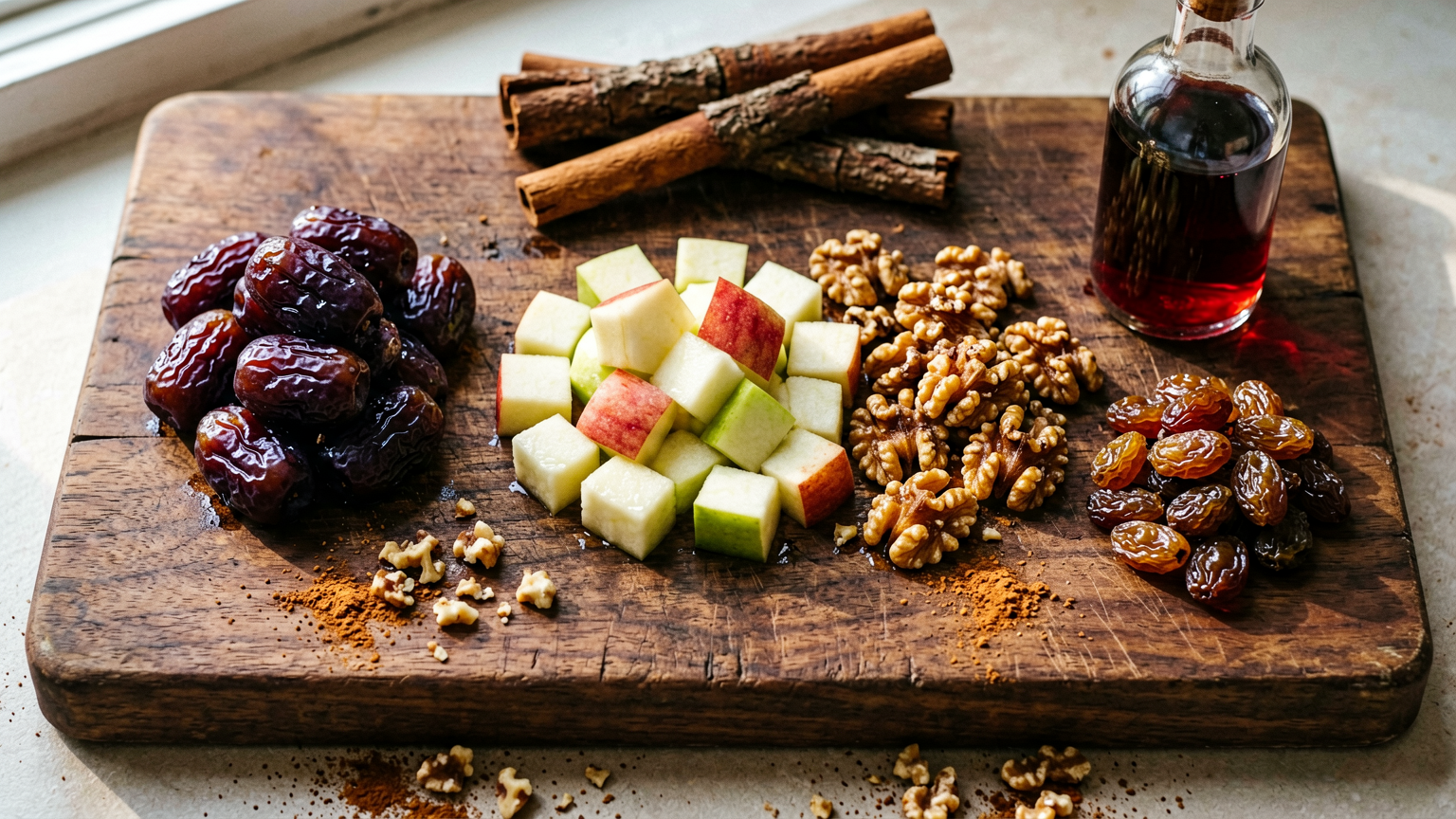
- 1 cup Medjool dates, pitted and roughly chopped
- 1/2 cup walnuts, toasted
- 1/4 cup apples, finely diced (such as Gala or Fuji)
- 1/4 cup raisins
- 1 tablespoon sweet kosher wine (or grape juice)
- 1/2 teaspoon ground cinnamon
- Pinch of ground cloves (optional)
Instructions
- Prepare your ingredients: Ensure your dates are pitted and roughly chopped. If your dates are a bit dry, you can soak them in warm water for about 5-10 minutes, then drain well before chopping.
- Toast the nuts: If you haven’t already, lightly toast the walnuts in a dry skillet over medium heat for 3-5 minutes, until fragrant. Let them cool completely before adding them to the food processor.
- Combine in food processor: Add the chopped dates, toasted walnuts, diced apples, and raisins to the bowl of a food processor. Pulse a few times until the mixture is coarsely chopped and starts to come together.
- Add liquids and spices: Pour in the sweet kosher wine (or grape juice) and sprinkle in the cinnamon and optional cloves. Continue pulsing until the mixture forms a thick, paste-like consistency. Be careful not to over-process; you want some texture, not a smooth puree.
- Adjust consistency: If the Charoset seems too dry, add another teaspoon of wine or grape juice and pulse again. If it’s too wet, you can add a few more chopped dates or a tablespoon of finely ground nuts.
- Transfer and serve: Spoon the Charoset into a serving bowl. It’s ready to be served as part of your Seder plate or enjoyed immediately.
Tips
- For a smoother texture, process the mixture for a bit longer, but aim to retain some of the nut and fruit pieces for interest.
- Toasting the walnuts significantly enhances their flavor and aroma. Don’t skip this step!
- Adjust the sweetness by using more or fewer dates and raisins. Different apple varieties will also lend different levels of tartness.
- If you don’t have a food processor, you can finely chop all the ingredients by hand and mix them in a bowl. This will give you a chunkier, more rustic Charoset.
- For a richer flavor, consider adding a tablespoon of honey or maple syrup, though this is not traditional for Passover.
- Ensure your apples are diced very finely to integrate well into the paste.
Serving Suggestions
- Traditionally served on the Seder plate during Passover.
- Delicious spread on matzah or challah.
- Can be used as a filling for pastries or crepes.
- A wonderful accompaniment to roasted meats or poultry.
- Serve alongside a cheese board for a sweet and savory contrast.
Storage Tips
Store Charoset in an airtight container in the refrigerator for up to one week. The flavors tend to meld and deepen over time, making it even more delicious on the second or third day.
FAQ
What is Charoset made of?
Charoset is typically made from a mixture of chopped fruits (like dates, apples, and raisins), nuts (like walnuts or almonds), and wine or grape juice, often flavored with cinnamon. The specific ingredients can vary by region and family tradition.
Nutrition Information
- Calories: Approximately 150-200 per serving (varies based on exact ingredients and portion size)
- Protein: 3-5g
- Fat: 6-9g
- Carbohydrates: 20-30g
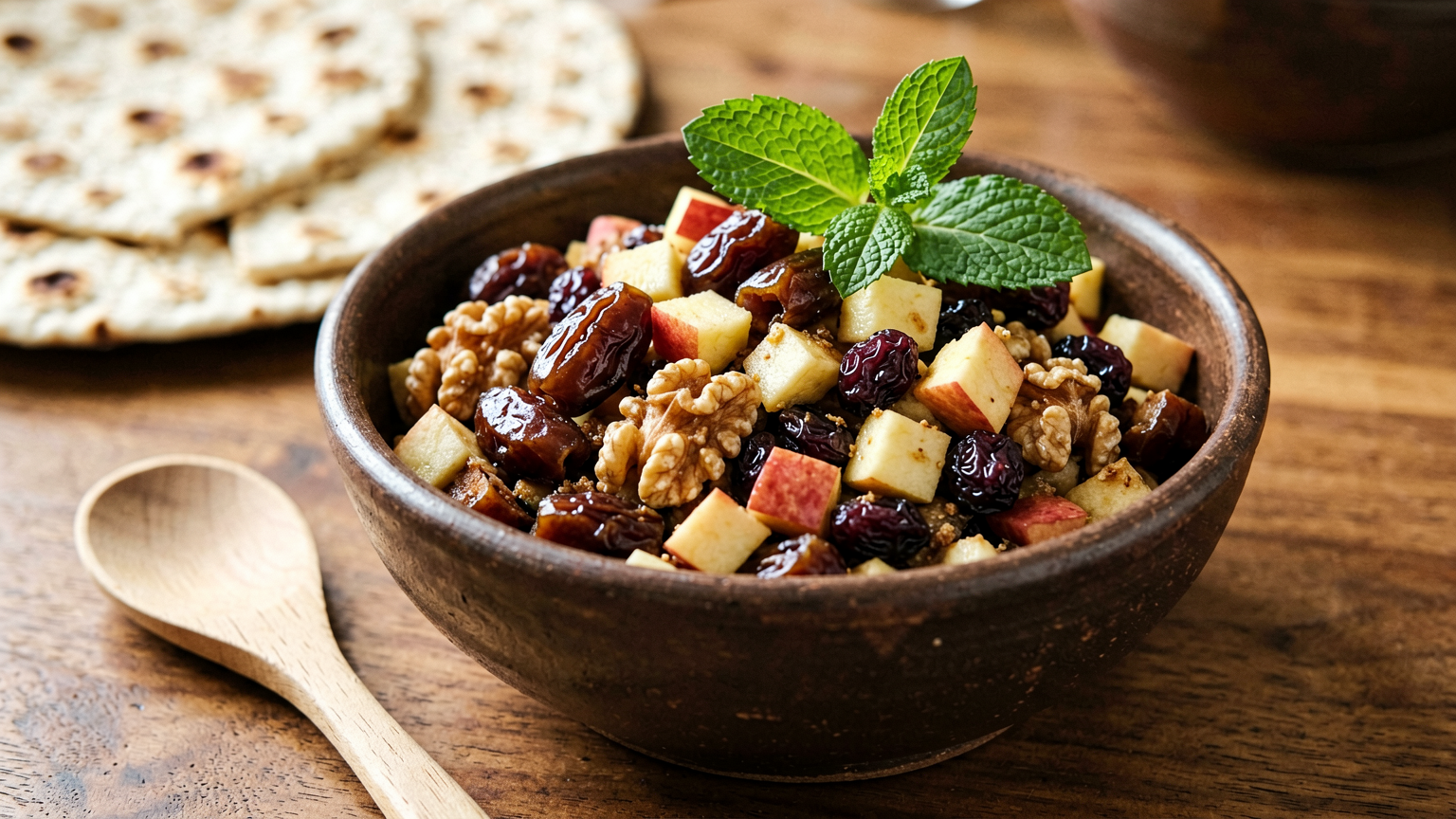
Authentic Charoset Recipe: A Taste of Tradition for Passover
Ingredients
Method
- Prepare your ingredients: Ensure your dates are pitted and roughly chopped. If your dates are a bit dry, you can soak them in warm water for about 5-10 minutes, then drain well before chopping.
- Toast the nuts: If you haven't already, lightly toast the walnuts in a dry skillet over medium heat for 3-5 minutes, until fragrant. Let them cool completely before adding them to the food processor.
- Combine in food processor: Add the chopped dates, toasted walnuts, diced apples, and raisins to the bowl of a food processor. Pulse a few times until the mixture is coarsely chopped and starts to come together.
- Add liquids and spices: Pour in the sweet kosher wine (or grape juice) and sprinkle in the cinnamon and optional cloves. Continue pulsing until the mixture forms a thick, paste-like consistency. Be careful not to over-process; you want some texture, not a smooth puree.
- Adjust consistency: If the Charoset seems too dry, add another teaspoon of wine or grape juice and pulse again. If it’s too wet, you can add a few more chopped dates or a tablespoon of finely ground nuts.
- Transfer and serve: Spoon the Charoset into a serving bowl. It's ready to be served as part of your Seder plate or enjoyed immediately.