Introduction
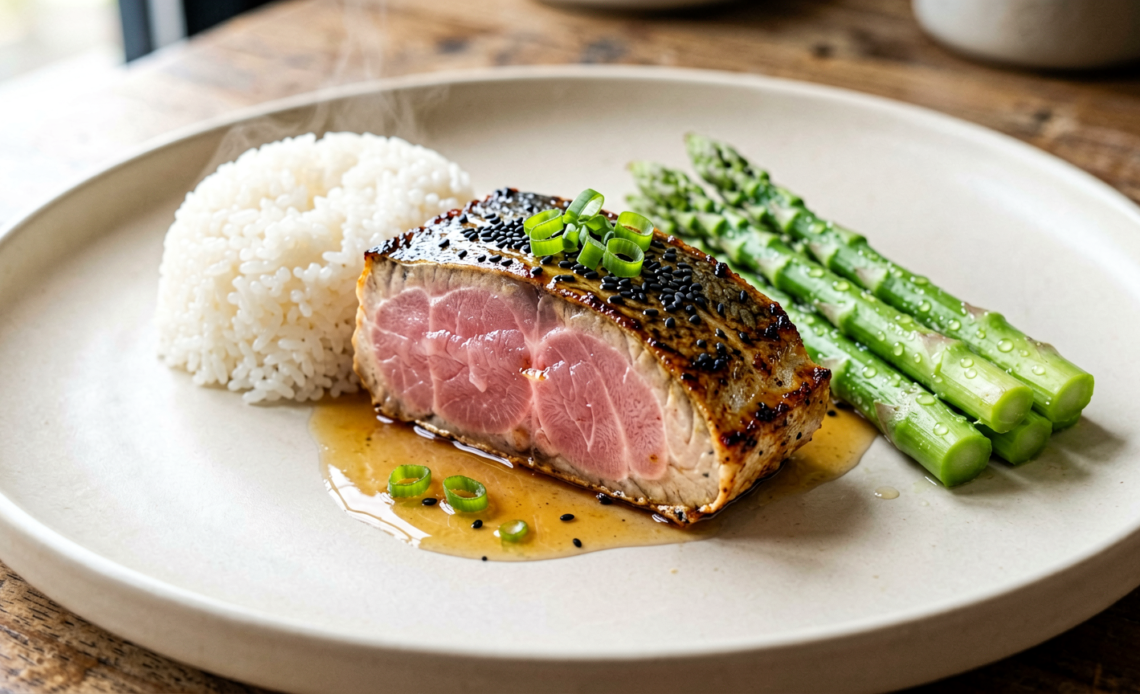
Craving a meal that’s both sophisticated and incredibly quick to prepare? Look no further than this seared ahi tuna steak recipe. Forget complicated steps; we’re diving into a method that delivers a restaurant-quality dish right in your own kitchen, perfect for impressing guests or treating yourself to a healthy, flavorful dinner in under 30 minutes.
Recommended Kitchen Tools
To make this recipe easier and more efficient, here are some tools I recommend:
-
Cast Iron Skillet
Check Price on Amazon →
-
Sharp Chef’s Knife
Check Price on Amazon →
-
Tongs
Check Price on Amazon →
Why You’ll Love This Recipe
This recipe is a game-changer for busy weeknights! It’s incredibly fast, requiring minimal prep and cooking time, yet results in a dish that feels gourmet. The tuna is buttery-tender on the inside with a perfectly seared crust, and it’s endlessly customizable with your favorite sauces and sides. Plus, it’s a fantastic source of lean protein and omega-3s, making it a guilt-free indulgence.
Ingredients
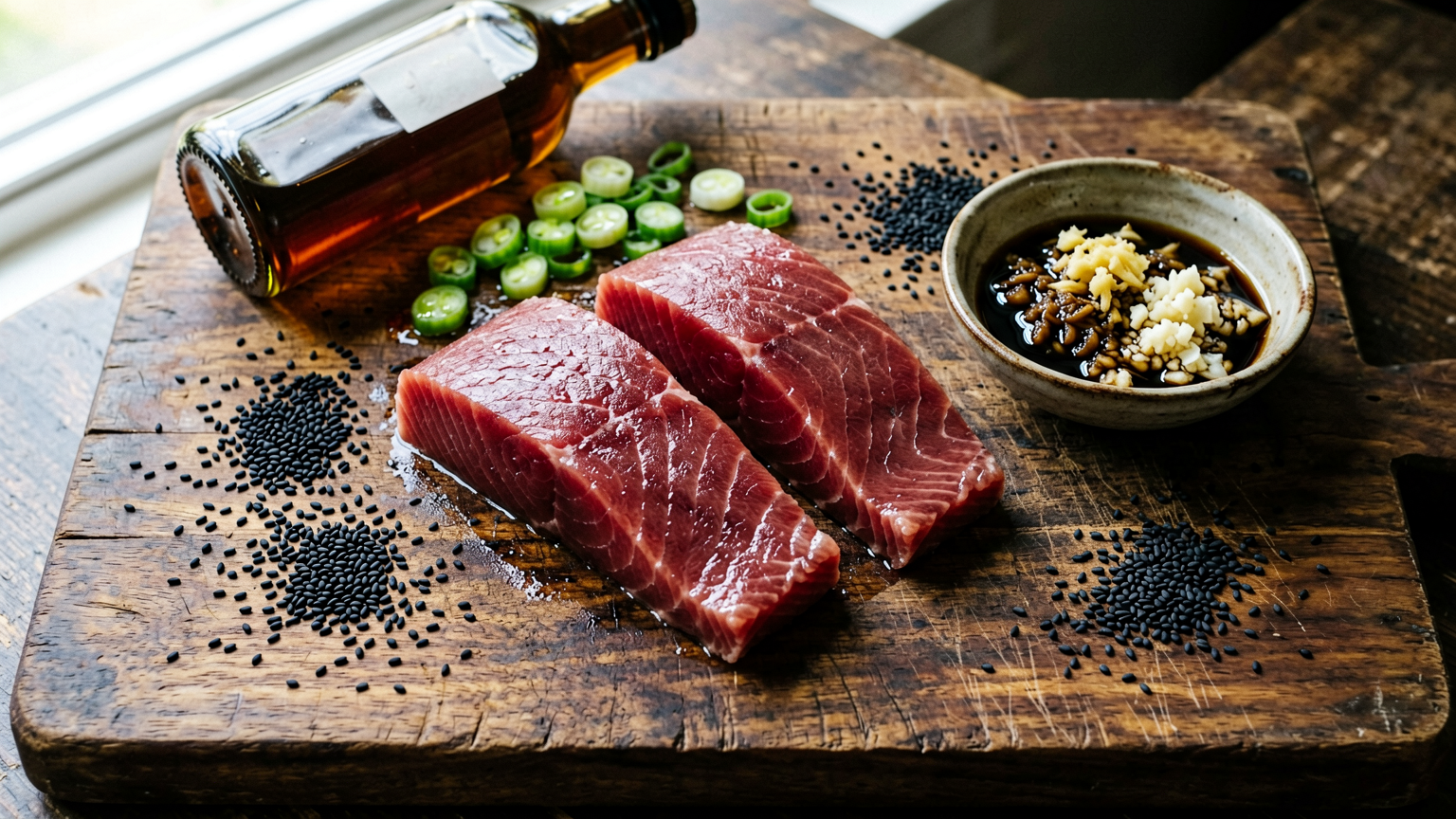
- 2 (6-ounce) sushi-grade ahi tuna steaks, about 1-inch thick
- 2 tablespoons sesame oil (or other high-heat oil like avocado or grapeseed)
- 1 tablespoon soy sauce (or tamari for gluten-free)
- 1 teaspoon grated fresh ginger
- 1 clove garlic, minced
- 1/2 teaspoon honey or maple syrup (optional, for a touch of sweetness)
- 1/4 teaspoon black pepper
- Sesame seeds, for garnish (optional)
- Sliced green onions, for garnish (optional)
Instructions
- Pat the tuna steaks completely dry with paper towels. This is crucial for achieving a good sear.
- In a small bowl, whisk together the sesame oil, soy sauce, grated ginger, minced garlic, honey (if using), and black pepper to create the marinade. Place the tuna steaks in a shallow dish and pour the marinade over them, ensuring they are coated. Let them marinate for at least 10 minutes at room temperature, or up to 30 minutes in the refrigerator.
- Heat a cast iron skillet or heavy-bottomed frying pan over high heat until it’s very hot – almost smoking. This high heat is key to getting a beautiful crust.
- Carefully remove the tuna steaks from the marinade, letting any excess drip off. Place the steaks in the hot skillet. Sear for 1 to 2 minutes per side for rare (the center should be red and slightly warm), or 2 to 3 minutes per side for medium-rare (the center will be slightly pink). Avoid overcooking, as tuna can become tough and dry.
- Once seared to your liking, immediately remove the tuna steaks from the skillet and place them on a clean cutting board. Let them rest for 2-3 minutes.
- Slice the tuna steaks against the grain into 1/2-inch thick pieces. Garnish with sesame seeds and sliced green onions, if desired.
Tips
- Use sushi-grade tuna: Ensure your tuna is labeled ‘sushi-grade’ or ‘sashimi-grade’ for safe raw consumption and the best flavor and texture.
- Don’t overcrowd the pan: Cook the tuna steaks in batches if necessary to ensure each side gets a good sear.
- High heat is your friend: A screaming hot pan is essential for developing that delicious crust quickly without overcooking the interior.
- Resting is important: Like any good steak, letting the tuna rest allows the juices to redistribute, resulting in a more tender and flavorful bite.
- Adjust searing time for desired doneness: The times provided are guidelines. Adjust based on the thickness of your steaks and your preference for doneness (rare, medium-rare).
Serving Suggestions
- Serve immediately with a drizzle of your favorite sauce, such as wasabi-ginger dressing, teriyaki glaze, or a spicy aioli.
- Pair with steamed rice (white, brown, or jasmine), quinoa, or a fresh mixed green salad.
- Add a side of steamed or roasted vegetables like broccoli, asparagus, or snap peas for a complete meal.
Storage Tips
Cooked ahi tuna is best enjoyed fresh. If you have leftovers, store them in an airtight container in the refrigerator for up to 1-2 days. Reheat gently or enjoy cold in salads or sandwiches.
FAQ
Can I use frozen tuna?
Yes, but ensure it’s fully thawed in the refrigerator before cooking. Pat it very dry.
How do I know if my tuna is sushi-grade?
Look for labels indicating ‘sushi-grade’ or ‘sashimi-grade’ from a reputable fishmonger. It means it has been handled and frozen to specific standards for raw consumption.
What happens if I overcook the tuna?
Overcooked ahi tuna becomes dry, tough, and chalky. Aim for a rare to medium-rare center for the best texture and flavor.
Nutrition Information
- Calories: 250 kcal
- Protein: 35g
- Fat: 10g
- Carbohydrates: 5g
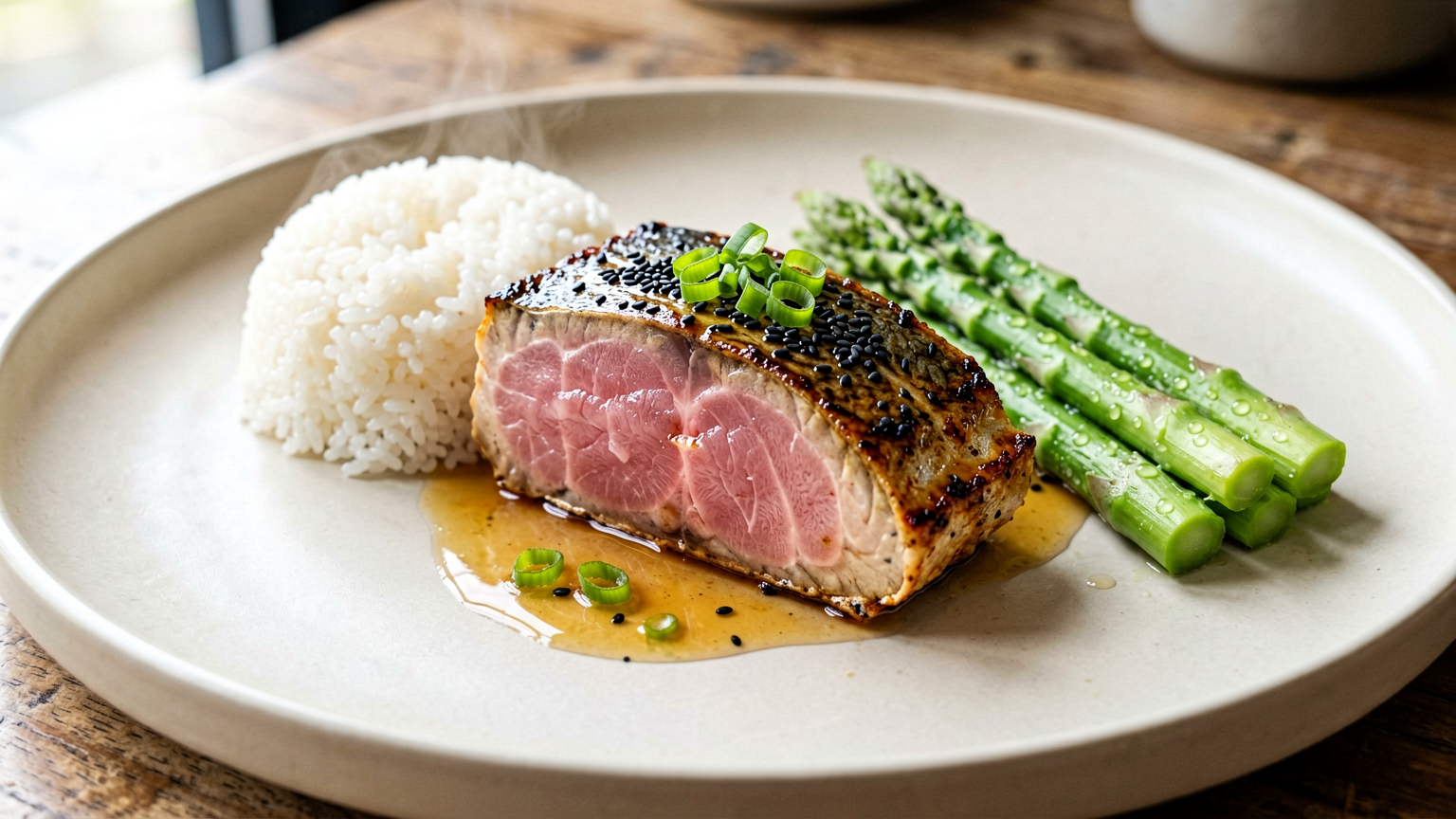
Seared Ahi Tuna Steak: A Quick & Elegant Weeknight Dinner
Ingredients
Method
- Pat the tuna steaks completely dry with paper towels. This is crucial for achieving a good sear.
- In a small bowl, whisk together the sesame oil, soy sauce, grated ginger, minced garlic, honey (if using), and black pepper to create the marinade. Place the tuna steaks in a shallow dish and pour the marinade over them, ensuring they are coated. Let them marinate for at least 10 minutes at room temperature, or up to 30 minutes in the refrigerator.
- Heat a cast iron skillet or heavy-bottomed frying pan over high heat until it's very hot – almost smoking. This high heat is key to getting a beautiful crust.
- Carefully remove the tuna steaks from the marinade, letting any excess drip off. Place the steaks in the hot skillet. Sear for 1 to 2 minutes per side for rare (the center should be red and slightly warm), or 2 to 3 minutes per side for medium-rare (the center will be slightly pink). Avoid overcooking, as tuna can become tough and dry.
- Once seared to your liking, immediately remove the tuna steaks from the skillet and place them on a clean cutting board. Let them rest for 2-3 minutes.
- Slice the tuna steaks against the grain into 1/2-inch thick pieces. Garnish with sesame seeds and sliced green onions, if desired.