Introduction
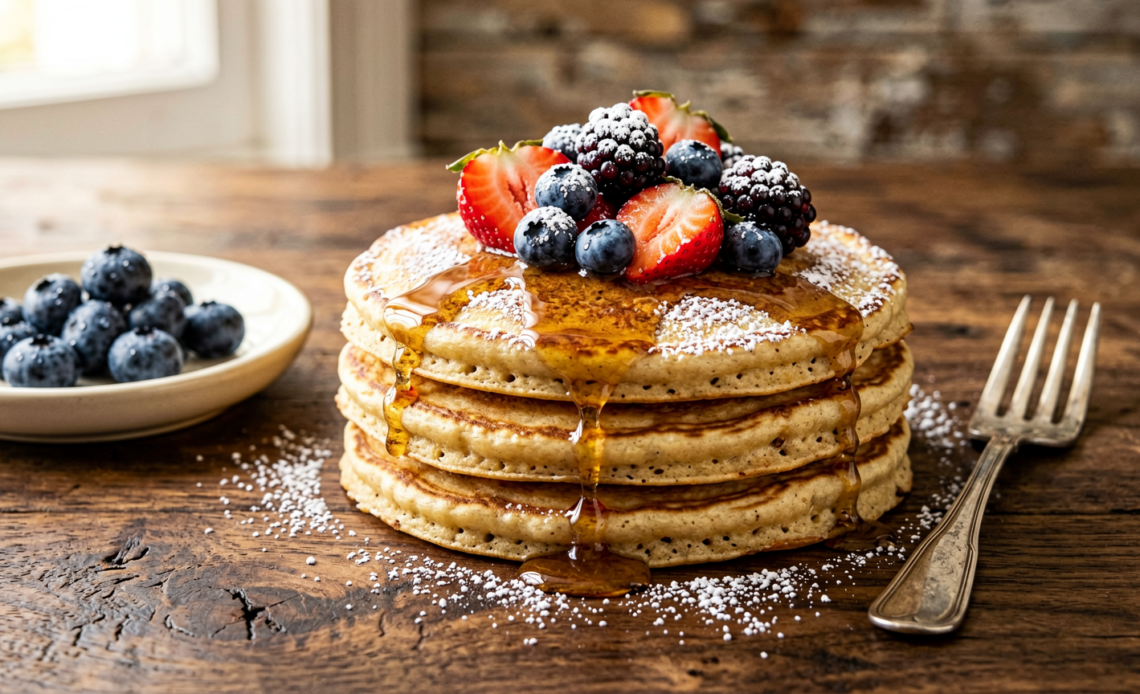
Tired of the same old flour? Welcome to the wonderful world of oat flour! This gluten-free powerhouse, made from simple oats, is a game-changer for your kitchen. Whether you’re a seasoned baker or just starting out, oat flour offers a delightful nutty flavor and a wonderfully tender texture to your favorite dishes. Get ready to explore a collection of recipes that are as nourishing as they are delicious!
Recommended Kitchen Tools
To make this recipe easier and more efficient, here are some tools I recommend:
-
High-Speed Blender or Food Processor
Check Price on Amazon →
-
Measuring Cups and Spoons Set
Check Price on Amazon →
-
Whisk and Spatula Set
Check Price on Amazon →
Why You’ll Love This Recipe
Oat flour is a fantastic pantry staple that’s naturally gluten-free and packed with fiber. It lends a unique, wholesome flavor and a slightly chewy texture to baked goods. Plus, it’s incredibly versatile, working beautifully in everything from pancakes and muffins to cookies and even as a thickening agent. You’ll love how easy it is to use and the healthy, satisfying results it delivers.
Ingredients
- Rolled oats (ensure certified gluten-free if needed)
- Optional additions for specific recipes: baking powder, baking soda, salt, sugar, eggs, milk (dairy or non-dairy), butter or oil, fruits, nuts, chocolate chips, spices (cinnamon, nutmeg), vanilla extract.
Instructions
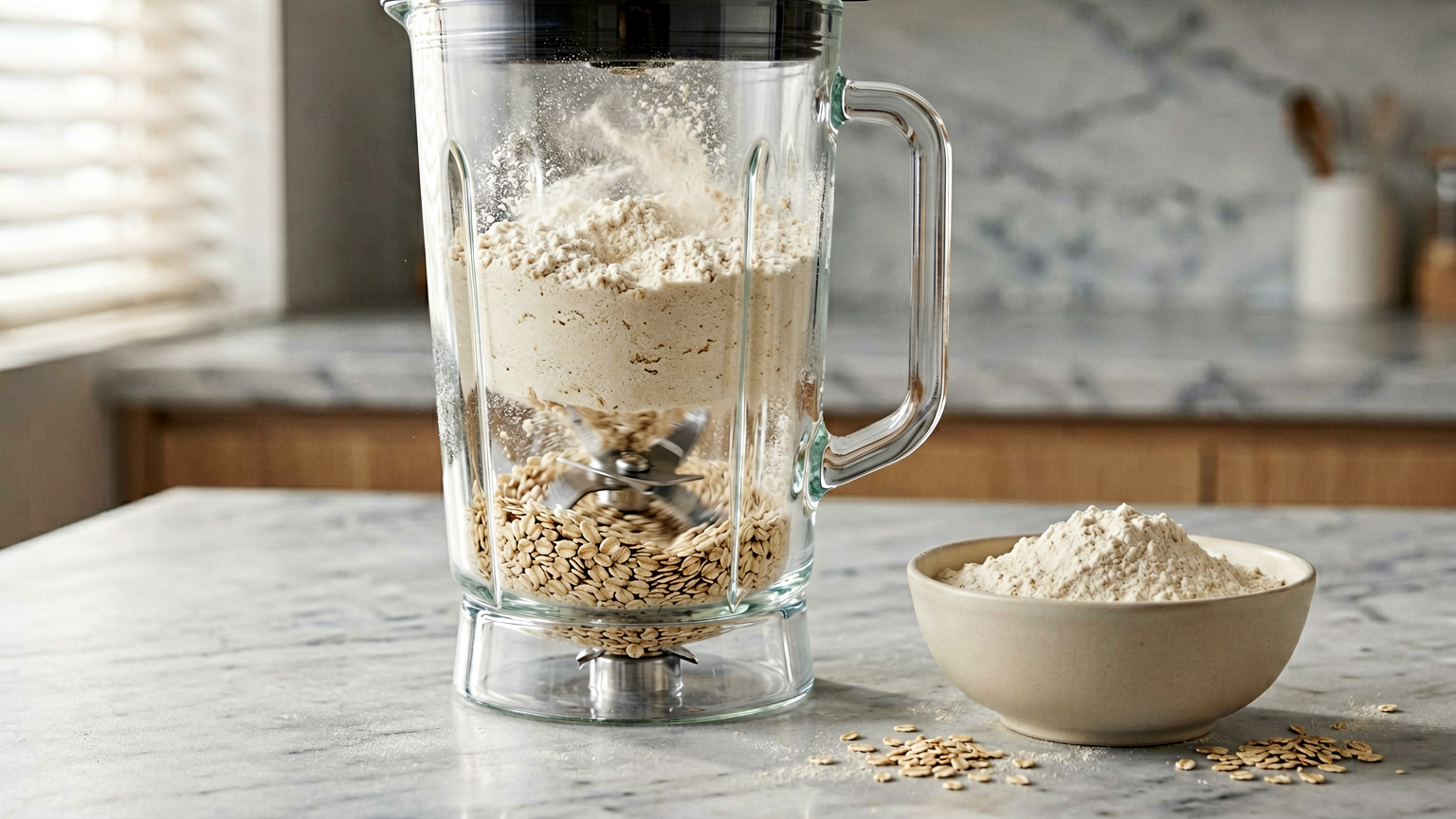
- **Making Oat Flour:** Start by measuring out your desired amount of rolled oats. For the best texture, use a high-speed blender or food processor. Add the rolled oats to the blender and process until they reach a fine, flour-like consistency. This usually takes about 30-60 seconds. Be careful not to over-process, as this can turn the oats into an oily paste. Sift the flour if you desire a finer texture, though it’s often not necessary.
- **Using Oat Flour in Recipes:** Oat flour can often be substituted 1:1 for all-purpose flour in many recipes. However, due to its different absorption properties, you might need slight adjustments. For baked goods, it can sometimes result in a denser texture, so combining it with a leavening agent like baking powder or baking soda is recommended. For recipes that rely heavily on gluten for structure (like yeast breads), oat flour may not be a direct substitute and might perform best in combination with other flours.
- **Specific Recipe Ideas:** Explore a wide range of recipes using your homemade oat flour. Think fluffy oat flour pancakes for breakfast, moist oat flour muffins for a snack, chewy oat flour cookies for dessert, or even as a binder in veggie burgers. Oat flour is also excellent for thickening sauces and gravies, adding a subtle nutty depth.
- **Storage:** Store your freshly made oat flour in an airtight container at room temperature for up to a month. For longer storage, keep it in the refrigerator or freezer to prevent it from going rancid, especially if you live in a warm climate.
Tips
- For the smoothest oat flour, toast your rolled oats lightly before grinding. This enhances their nutty flavor and makes them easier to grind.
- If your recipe calls for all-purpose flour and you’re substituting with oat flour, consider adding a touch more liquid or fat, as oat flour can be more absorbent.
- Always use certified gluten-free oats if you are baking for someone with celiac disease or gluten sensitivity.
- Don’t discard the oat bran and germ when grinding; they contain valuable nutrients and fiber. The whole oat is what makes oat flour so healthy!
- Experiment with different types of oats (like old-fashioned or quick oats) to see how they affect the texture of your flour and final baked goods.
Serving Suggestions
- Serve oat flour pancakes or waffles with fresh berries, maple syrup, or a dollop of yogurt.
- Enjoy oat flour muffins as a quick breakfast on the go or with a cup of coffee.
- Pair oat flour cookies with a glass of milk for a comforting treat.
- Use oat flour as a base for healthy energy balls or bars, perfect for post-workout snacks.
Storage Tips
Store homemade oat flour in an airtight container in a cool, dry place for up to 1 month. For longer shelf life, refrigerate or freeze it to maintain freshness and prevent it from going rancid.
FAQ
Is oat flour gluten-free?
Yes, oats are naturally gluten-free. However, to avoid cross-contamination, always choose certified gluten-free rolled oats if you have celiac disease or a gluten sensitivity.
Can I substitute oat flour for all-purpose flour?
Yes, in many recipes, you can substitute oat flour 1:1 for all-purpose flour. However, the texture might be slightly different, and you may need minor adjustments to liquid or leavening agents.
How do I make oat flour?
Simply blend rolled oats (certified gluten-free if needed) in a high-speed blender or food processor until they form a fine powder. Sift if a finer texture is desired.
Nutrition Information
- Calories: Approximately 380-400 kcal per 100g (varies based on oat type)
- Protein: Approximately 10-13g per 100g
- Fat: Approximately 7-8g per 100g
- Carbohydrates: Approximately 65-70g per 100g (including fiber)
The Ultimate Oat Flour Recipes Guide: Wholesome & Delicious
Ingredients
Method
- **Making Oat Flour:** Start by measuring out your desired amount of rolled oats. For the best texture, use a high-speed blender or food processor. Add the rolled oats to the blender and process until they reach a fine, flour-like consistency. This usually takes about 30-60 seconds. Be careful not to over-process, as this can turn the oats into an oily paste. Sift the flour if you desire a finer texture, though it's often not necessary.
- **Using Oat Flour in Recipes:** Oat flour can often be substituted 1:1 for all-purpose flour in many recipes. However, due to its different absorption properties, you might need slight adjustments. For baked goods, it can sometimes result in a denser texture, so combining it with a leavening agent like baking powder or baking soda is recommended. For recipes that rely heavily on gluten for structure (like yeast breads), oat flour may not be a direct substitute and might perform best in combination with other flours.
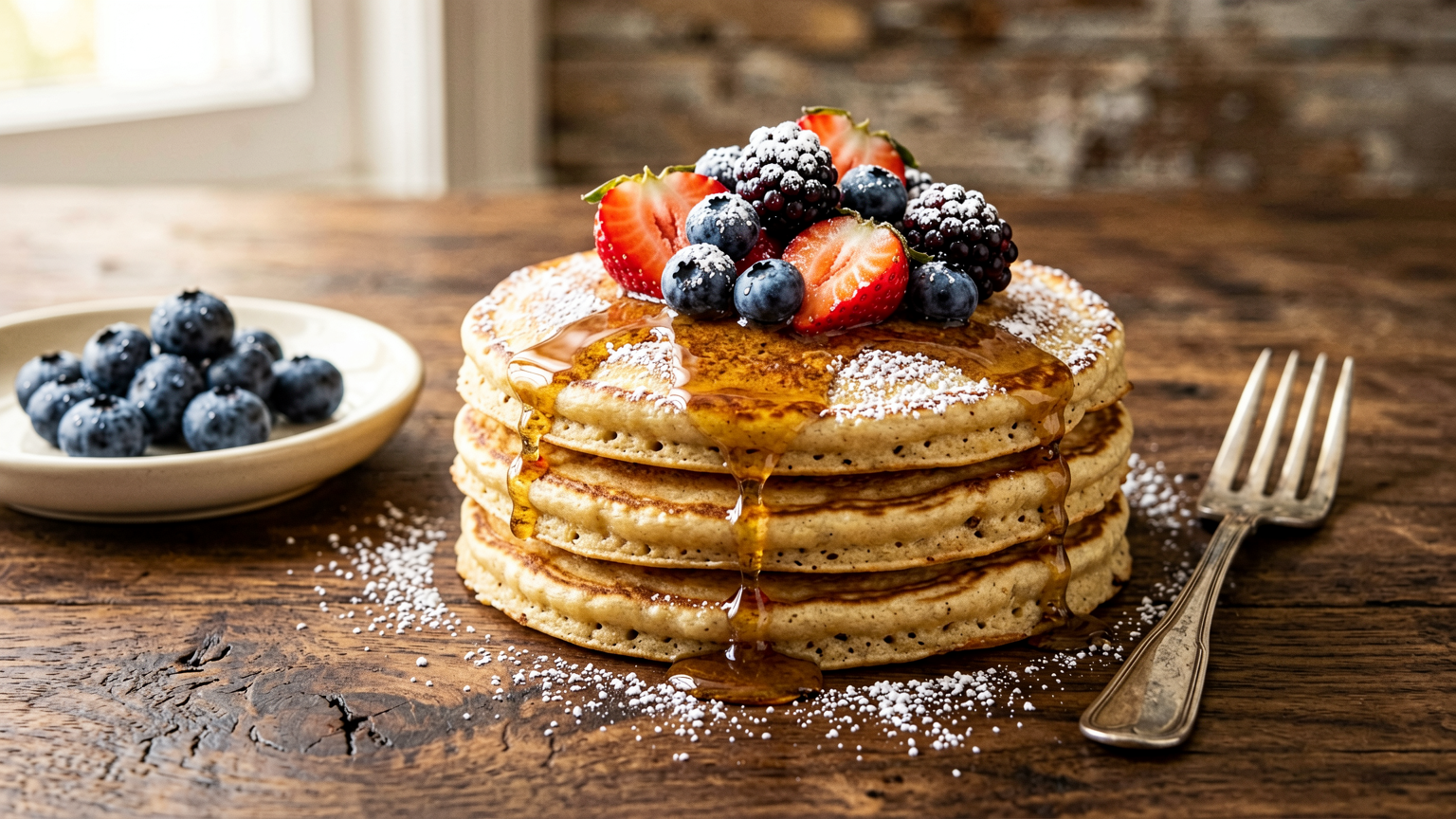
- **Specific Recipe Ideas:** Explore a wide range of recipes using your homemade oat flour. Think fluffy oat flour pancakes for breakfast, moist oat flour muffins for a snack, chewy oat flour cookies for dessert, or even as a binder in veggie burgers. Oat flour is also excellent for thickening sauces and gravies, adding a subtle nutty depth.
- **Storage:** Store your freshly made oat flour in an airtight container at room temperature for up to a month. For longer storage, keep it in the refrigerator or freezer to prevent it from going rancid, especially if you live in a warm climate.