Introduction
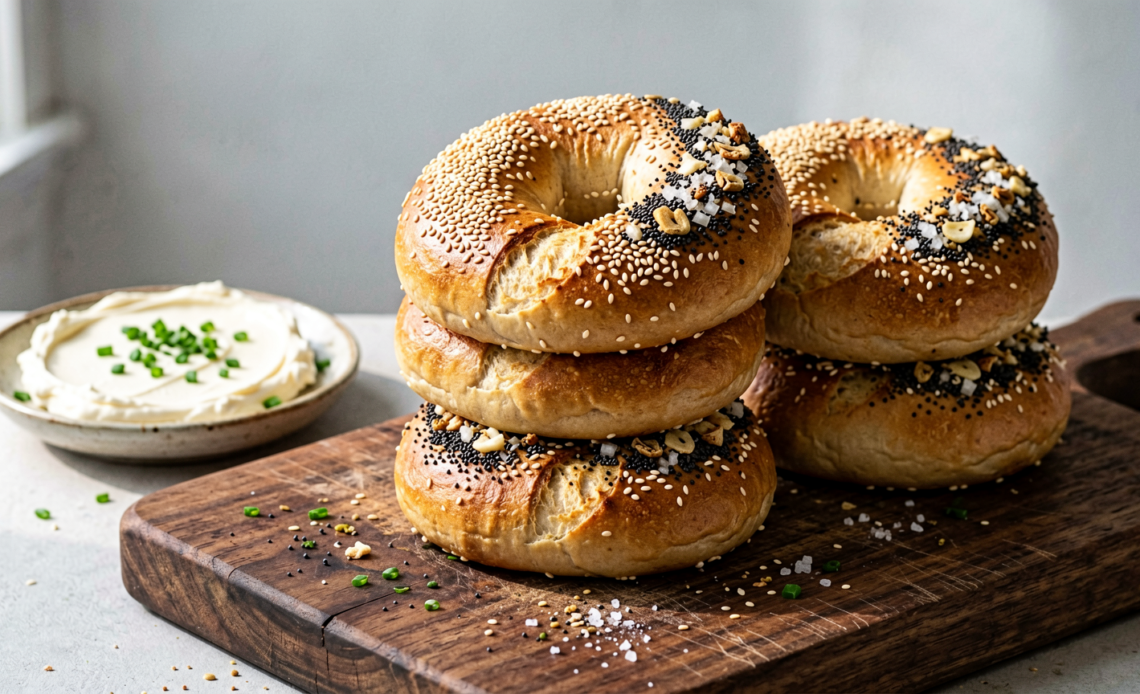
Tired of store-bought bagels that lack that authentic chew and complex flavor? Get ready to elevate your breakfast game! We’re diving deep into the wonderful world of sourdough to bring you a recipe for bagels that are truly exceptional. Imagine a crust with just the right amount of crisp, a tender and airy interior with that signature sourdough tang, and a satisfying chew that will have you ditching your local bakery for good. This isn’t just a recipe; it’s an invitation to create something truly special in your own kitchen.
Recommended Kitchen Tools
To make this recipe easier and more efficient, here are some tools I recommend:
-
Stand Mixer with Dough Hook
Check Price on Amazon →
-
Bench Scraper
Check Price on Amazon →
-
Large Pot for Boiling
Check Price on Amazon →
Why You’ll Love This Recipe
This sourdough bagel recipe delivers unparalleled flavor and texture. The natural fermentation process of sourdough starter creates a depth of taste you can’t get anywhere else, and the resulting bagels are wonderfully chewy with a delightful tang. Plus, the satisfaction of pulling a batch of these golden beauties from your oven is simply unmatched. They are perfect for breakfast, lunch, or a hearty snack, and infinitely customizable with your favorite toppings.
Ingredients
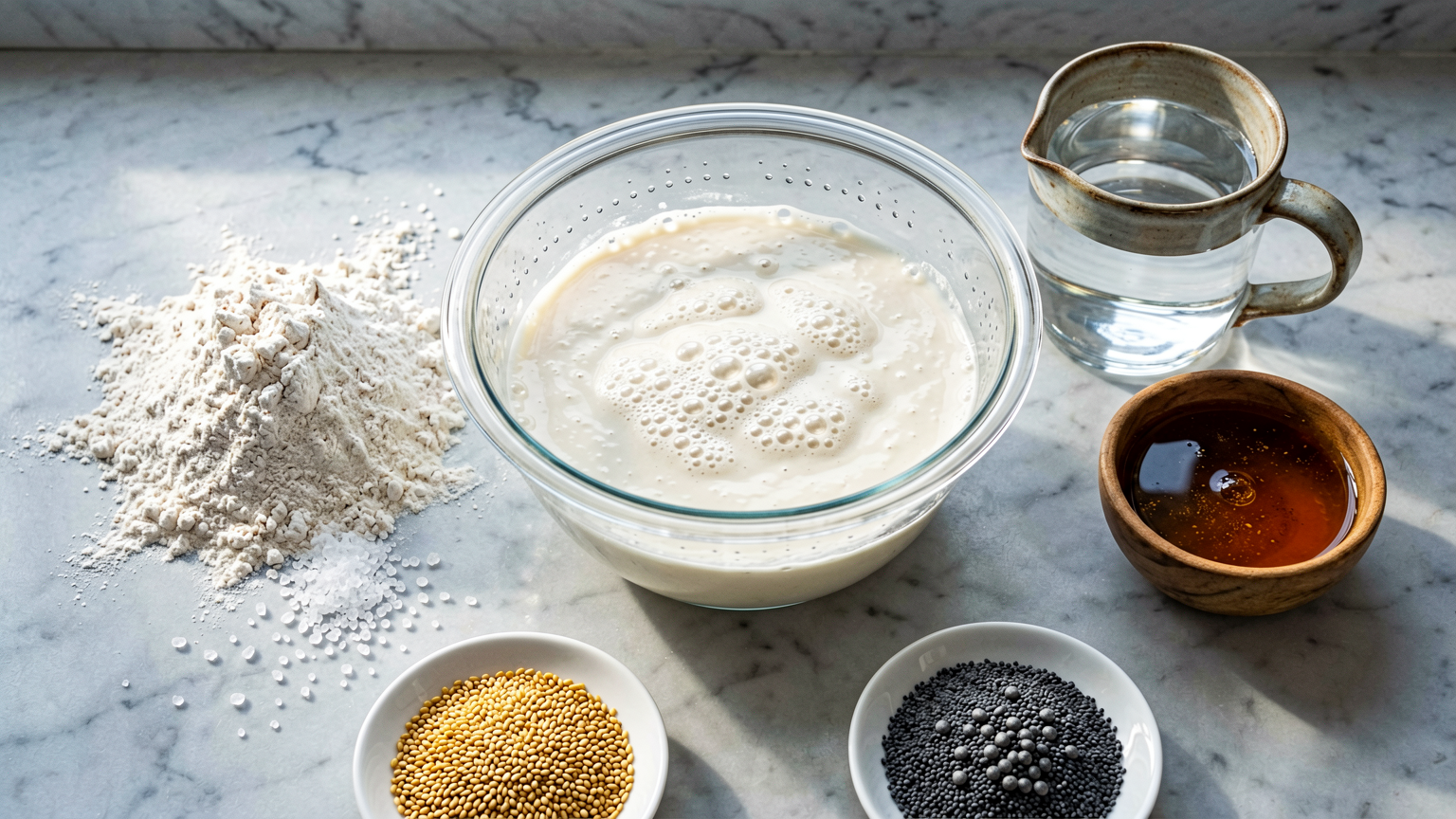
- 100g active sourdough starter
- 350g warm water (around 95-105°F or 35-40°C)
- 500g bread flour, plus more for dusting
- 10g salt
- 1 tablespoon malt syrup or barley malt powder (optional, for color and flavor)
- For Boiling: Water and 1 tablespoon baking soda
- Toppings: Sesame seeds, poppy seeds, everything bagel seasoning, coarse salt, etc.
Instructions
- **Activate Your Starter:** Ensure your sourdough starter is active and bubbly. Feed it 4-12 hours before you plan to mix your dough, depending on its usual activity level. You want it to have at least doubled in volume and be full of air.
- **Mix the Dough:** In a large bowl or the bowl of your stand mixer, combine the active sourdough starter and warm water. Whisk gently to combine. Add the bread flour and salt. If using, add the malt syrup or powder. Mix until a shaggy dough forms. If using a stand mixer, use the dough hook on low speed for about 5-7 minutes until the dough starts to come together and becomes slightly elastic. If mixing by hand, turn the dough out onto a lightly floured surface and knead for 8-10 minutes until smooth and elastic.
- **First Fermentation (Bulk Ferment):** Place the dough in a lightly oiled bowl, cover it with plastic wrap or a damp kitchen towel, and let it rest at room temperature for 4-6 hours. During this time, the dough will rise and become bubbly. You can also perform a stretch and fold every hour for the first 2-3 hours to build strength.
- **Shape the Bagels:** Turn the dough out onto a lightly floured surface. Gently divide the dough into 8 equal portions (about 125g each). Shape each portion into a ball. Cover the balls with a damp towel and let them rest for 15-20 minutes. This resting period makes shaping easier. Once rested, take one ball of dough and flatten it into a disc. Use your thumb or a finger to poke a hole in the center, then gently stretch the hole to about 1-1.5 inches in diameter. You want a distinct hole. Reshape the dough into a ring, ensuring the hole is centered. Repeat with the remaining dough portions.
- **Second Fermentation (Proofing):** Place the shaped bagels on a baking sheet lined with parchment paper, ensuring they have some space between them. Lightly dust the tops with flour or spray with a light mist of water and cover loosely with plastic wrap. Let them proof at room temperature for 1-2 hours, or until they look slightly puffy. You can also refrigerate them overnight for a slower fermentation and more developed flavor.
- **Preheat and Prepare for Boiling:** About 30 minutes before you’re ready to boil, preheat your oven to 425°F (220°C). Bring a large pot of water to a rolling boil. Add the baking soda to the boiling water. This step is crucial for achieving that classic bagel crust.
- **Boil the Bagels:** Carefully drop 2-3 bagels at a time into the boiling water. Boil for 30-60 seconds per side, until they puff up slightly. Do not overcrowd the pot. Use a slotted spoon or spider strainer to remove the bagels from the water and place them back on the parchment-lined baking sheet. While they are still wet, sprinkle your desired toppings onto the bagels.
- **Bake the Bagels:** Transfer the baking sheet to the preheated oven. Bake for 18-25 minutes, or until the bagels are golden brown and firm. Rotate the baking sheet halfway through for even baking.
- **Cool:** Once baked, transfer the bagels to a wire rack to cool completely before slicing and enjoying.
Tips
- Use bread flour for the best chewy texture. Its higher protein content develops gluten better.
- Ensure your sourdough starter is very active for a good rise and tangy flavor.
- Don’t skip the boiling step! It’s essential for creating the chewy crust.
- Adjust the boiling time based on your preference; longer boiling results in a chewier bagel.
- For a deeper flavor, consider refrigerating the shaped bagels overnight before boiling and baking.
Serving Suggestions
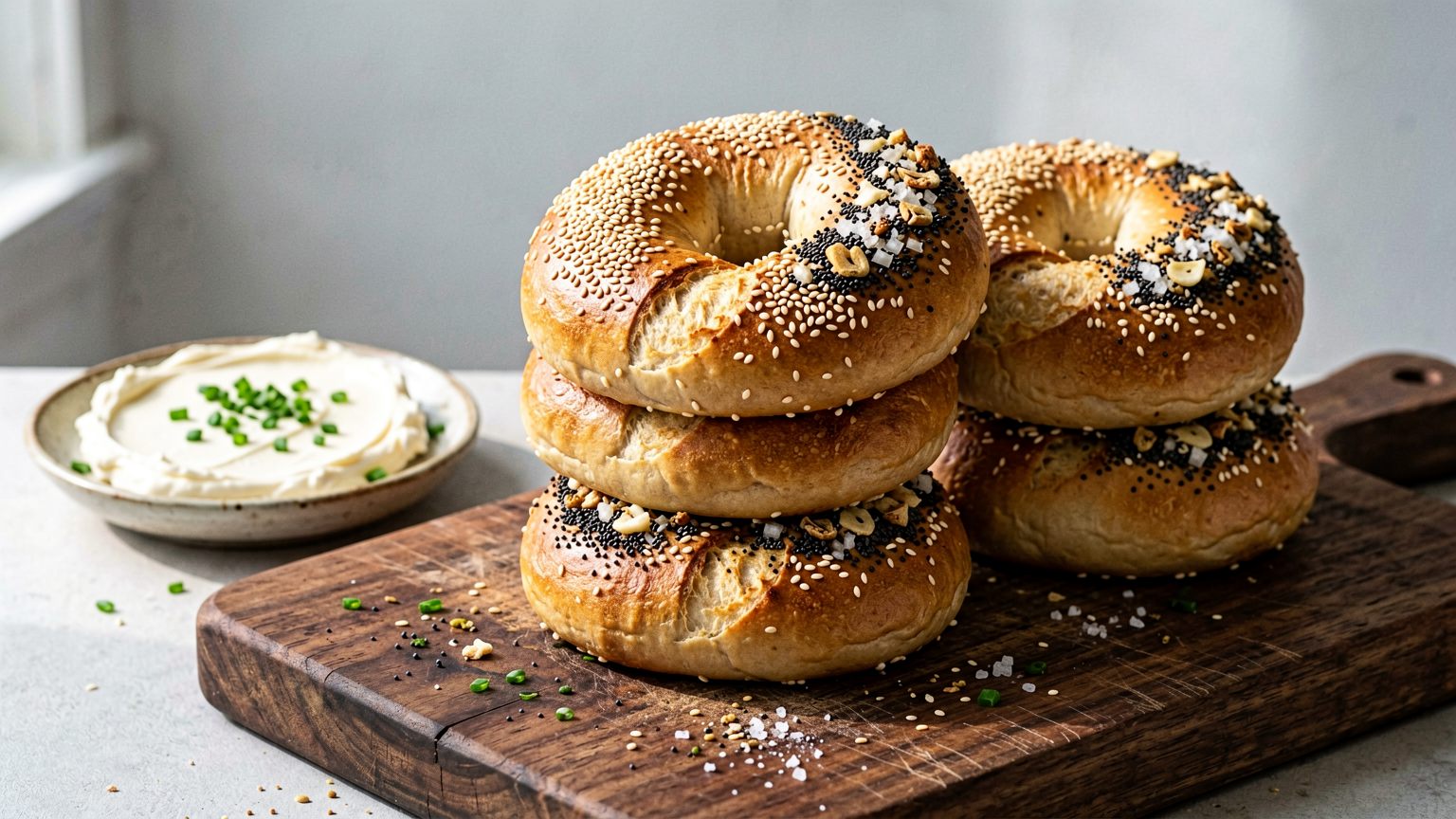
- Serve warm with cream cheese, butter, or your favorite spread.
- Top with smoked salmon, capers, and red onion for a classic lox bagel.
- Use them as the base for breakfast sandwiches with eggs, cheese, and bacon.
- Slice and toast for a delightful crunch with jam or avocado.
Storage Tips
Store cooled bagels in an airtight container or a resealable bag at room temperature for up to 2 days. For longer storage, wrap them tightly in plastic wrap and then place them in a freezer bag. They can be frozen for up to 3 months. Thaw at room temperature or reheat in a toaster or oven.
FAQ
Can I make sourdough bagels without a sourdough starter?
Yes, you can adapt this recipe using commercial yeast (about 1.5 teaspoons active dry yeast) and omitting the starter. You’ll need to adjust the fermentation times accordingly.
Why are my sourdough bagels not chewy?
Several factors can affect chewiness: not using bread flour, insufficient kneading, not proofing long enough, or skipping/shortening the boiling step. Ensure you’re following all steps carefully.
How do I get the seeds to stick to my bagels?
The best way is to dip the boiled and drained bagels into a shallow bowl of toppings. You can also lightly mist the bagels with water before adding toppings if they seem too dry.
Nutrition Information
- Calories: Approximately 280-320 kcal per bagel (varies based on size and toppings)
- Protein: Approximately 10-12g
- Fat: Approximately 1-3g
- Carbohydrates: Approximately 55-65g
Master the Art of Homemade Sourdough Bagels: A Step-by-Step Guide
Ingredients
Method
- **Activate Your Starter:** Ensure your sourdough starter is active and bubbly. Feed it 4-12 hours before you plan to mix your dough, depending on its usual activity level. You want it to have at least doubled in volume and be full of air.
- **Mix the Dough:** In a large bowl or the bowl of your stand mixer, combine the active sourdough starter and warm water. Whisk gently to combine. Add the bread flour and salt. If using, add the malt syrup or powder. Mix until a shaggy dough forms. If using a stand mixer, use the dough hook on low speed for about 5-7 minutes until the dough starts to come together and becomes slightly elastic. If mixing by hand, turn the dough out onto a lightly floured surface and knead for 8-10 minutes until smooth and elastic.
- **First Fermentation (Bulk Ferment):** Place the dough in a lightly oiled bowl, cover it with plastic wrap or a damp kitchen towel, and let it rest at room temperature for 4-6 hours. During this time, the dough will rise and become bubbly. You can also perform a stretch and fold every hour for the first 2-3 hours to build strength.
- **Shape the Bagels:** Turn the dough out onto a lightly floured surface. Gently divide the dough into 8 equal portions (about 125g each). Shape each portion into a ball. Cover the balls with a damp towel and let them rest for 15-20 minutes. This resting period makes shaping easier. Once rested, take one ball of dough and flatten it into a disc. Use your thumb or a finger to poke a hole in the center, then gently stretch the hole to about 1-1.5 inches in diameter. You want a distinct hole. Reshape the dough into a ring, ensuring the hole is centered. Repeat with the remaining dough portions.
- **Second Fermentation (Proofing):** Place the shaped bagels on a baking sheet lined with parchment paper, ensuring they have some space between them. Lightly dust the tops with flour or spray with a light mist of water and cover loosely with plastic wrap. Let them proof at room temperature for 1-2 hours, or until they look slightly puffy. You can also refrigerate them overnight for a slower fermentation and more developed flavor.
- **Preheat and Prepare for Boiling:** About 30 minutes before you're ready to boil, preheat your oven to 425°F (220°C). Bring a large pot of water to a rolling boil. Add the baking soda to the boiling water. This step is crucial for achieving that classic bagel crust.
- **Boil the Bagels:** Carefully drop 2-3 bagels at a time into the boiling water. Boil for 30-60 seconds per side, until they puff up slightly. Do not overcrowd the pot. Use a slotted spoon or spider strainer to remove the bagels from the water and place them back on the parchment-lined baking sheet. While they are still wet, sprinkle your desired toppings onto the bagels.
- **Bake the Bagels:** Transfer the baking sheet to the preheated oven. Bake for 18-25 minutes, or until the bagels are golden brown and firm. Rotate the baking sheet halfway through for even baking.
- **Cool:** Once baked, transfer the bagels to a wire rack to cool completely before slicing and enjoying.