Introduction
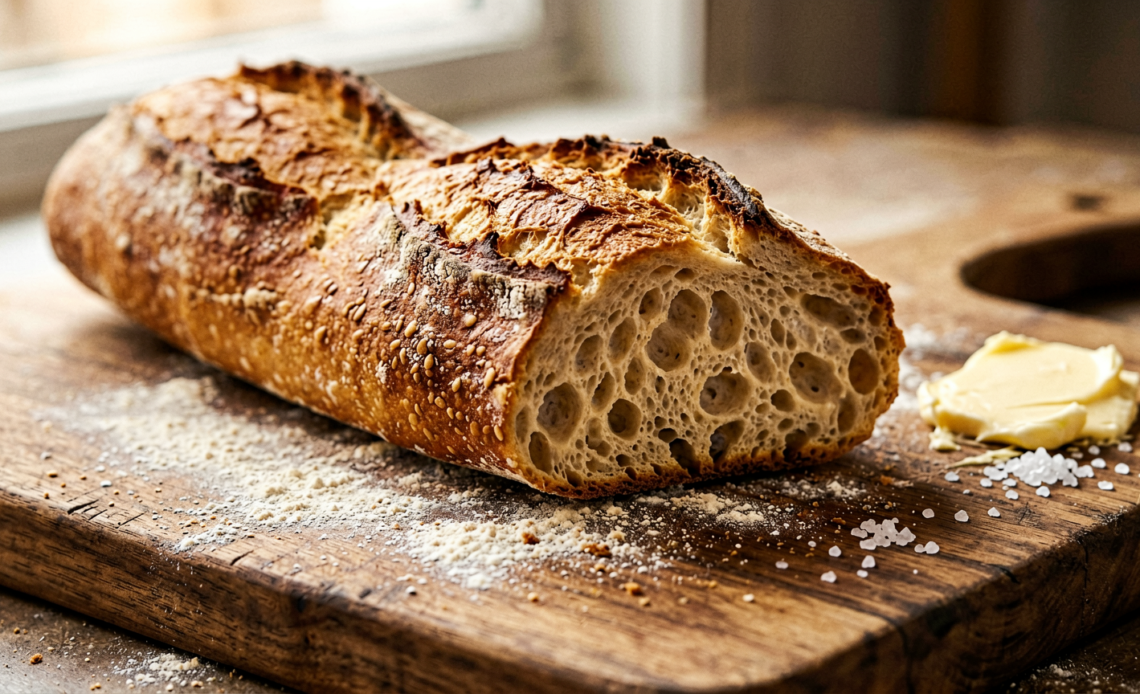
There’s something undeniably magical about a truly great baguette. The crackle of the crust, the airy, chewy crumb, and that subtle tang – it’s a sensory experience that transports you straight to a Parisian boulangerie. While achieving that perfect sourdough baguette at home might seem daunting, I’m here to tell you it’s entirely within your reach! This recipe breaks down the process into manageable steps, empowering you to create bakery-quality loaves that will have everyone asking for your secret.
Recommended Kitchen Tools
To make this recipe easier and more efficient, here are some tools I recommend:
-
Digital Kitchen Scale
Check Price on Amazon →
-
Baking Steel or Stone
Check Price on Amazon →
-
Bench Scraper
Check Price on Amazon →
Why You’ll Love This Recipe
This sourdough baguette recipe delivers an unparalleled crust with a wonderfully open and chewy interior. The natural fermentation process of sourdough not only adds a delightful depth of flavor but also makes the bread more digestible. Perfect for sandwiches, dipping, or simply enjoying with a smear of butter, these baguettes are a testament to the rewarding nature of home baking.
Ingredients
- 100g active sourdough starter
- 375g warm water (around 80-85°F or 27-29°C)
- 500g bread flour
- 10g fine sea salt
Instructions
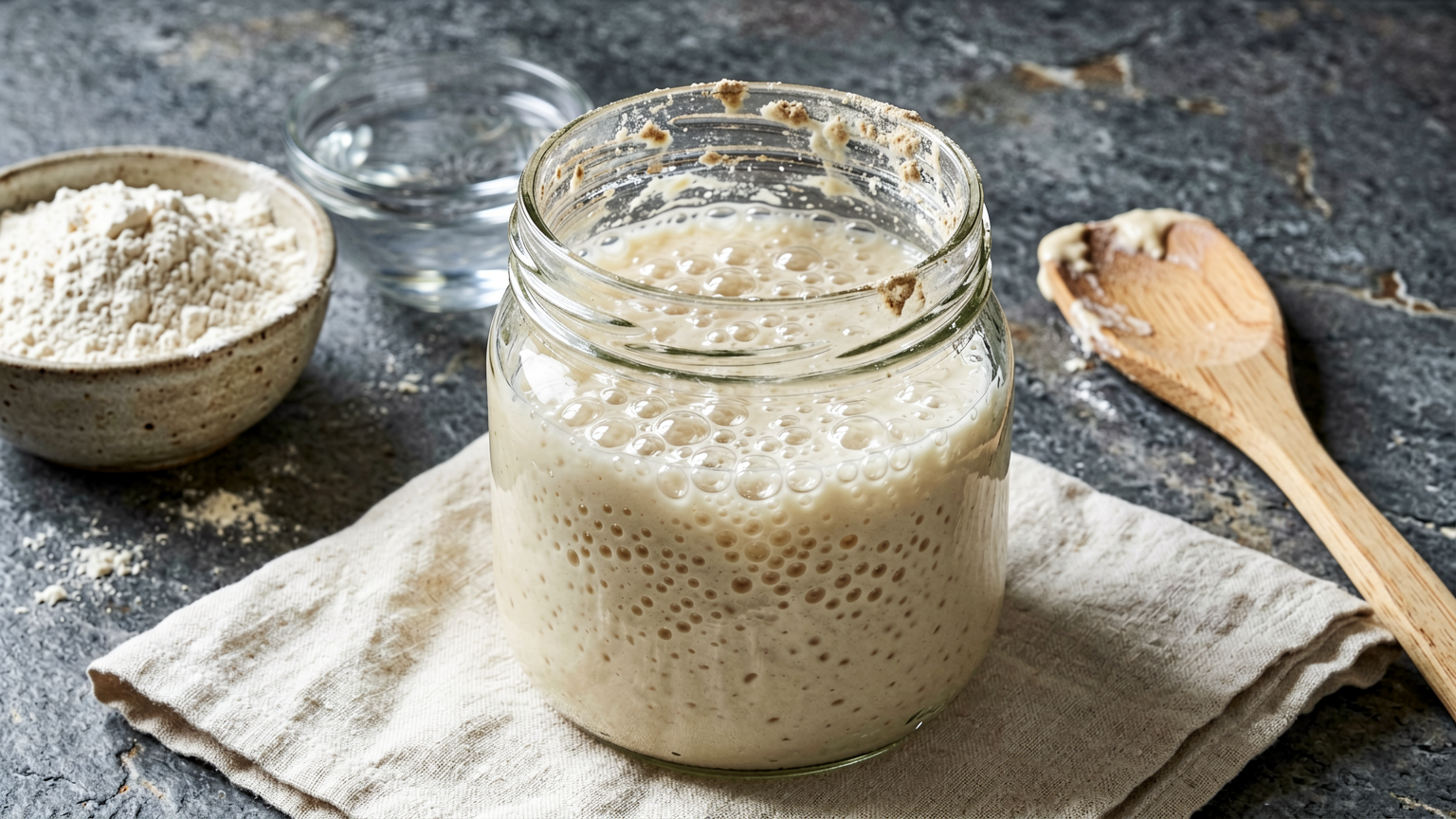
- **Feed Your Starter:** Ensure your sourdough starter is active and bubbly. Feed it 4-12 hours before you plan to mix your dough, aiming for it to double in volume and pass the float test (a small spoonful floats in water).
- **Mix the Dough:** In a large bowl, combine the active sourdough starter and warm water. Whisk gently to break up the starter. Add the bread flour and mix with your hands or a spatula until just combined and no dry flour remains. Cover and let it rest for 30 minutes (this is the autolyse period).
- **Add Salt & Knead:** Sprinkle the salt over the dough. Wet your hands slightly and work the salt into the dough by pinching and folding for about 5 minutes until it feels more cohesive. The dough will be sticky.
- **Bulk Fermentation with Folds:** Over the next 2-3 hours, perform a series of stretch and folds every 30 minutes. To do this, wet your hands, grab one side of the dough, stretch it upwards, and fold it over the center. Rotate the bowl and repeat for all four sides. This builds strength in the dough. After the folds, let the dough rest, covered, in a warm spot until it has increased in volume by about 50-75%.
- **Pre-shape:** Gently turn the dough out onto a lightly floured surface. Using a bench scraper, gently shape the dough into a rough rectangle and then into a loose log. Let it rest, uncovered, for 20-30 minutes to relax the gluten.
- **Final Shape:** Lightly flour your work surface again. Take the rested dough and gently flatten it into a rectangle. Fold the top third down to the middle and press to seal. Fold the bottom third up and press to seal. Then, fold the dough in half lengthwise and use the heel of your hand to firmly seal the seam. Gently roll the dough back and forth to lengthen it into a baguette shape, about 14-16 inches long. Be careful not to degas the dough too much.
- **Proofing:** Place the shaped baguettes seam-side up on a heavily floured couche (or a floured tea towel) to prevent sticking. Create folds in the fabric to keep the baguettes separate. Cover loosely and let them proof at room temperature for 1-2 hours, or until they look puffy and a gentle poke leaves a slight indentation that slowly springs back. Alternatively, you can proof them in the refrigerator for 8-24 hours for a more developed flavor.
- **Preheat Oven & Prepare for Baking:** About 45 minutes before you plan to bake, place your baking steel or stone on the middle rack of your oven and preheat to 475°F (245°C). Prepare a baking sheet with parchment paper or a pizza peel dusted with cornmeal or semolina.
- **Bake the Baguettes:** Carefully flip the proofed baguettes onto your prepared baking sheet or peel. Using a sharp knife or razor blade (lame), make 3-5 quick, decisive diagonal slashes (scores) on the top of each baguette. Carefully slide the baguettes onto the preheated baking steel or stone. Add about 1 cup of hot water to a shallow pan placed on the bottom rack of the oven to create steam (this is crucial for a crispy crust).
- **Baking Time:** Bake for 10 minutes with steam. Then, carefully remove the steaming pan and reduce the oven temperature to 450°F (230°C). Continue baking for another 15-20 minutes, or until the baguettes are deeply golden brown and sound hollow when tapped on the bottom.
Tips
- **Starter Health is Key:** A vigorous, active starter is the foundation of great sourdough. Make sure yours is ready before you begin.
- **Hydration Matters:** Sourdough can be sticky. Don’t be tempted to add too much extra flour during shaping; use wet hands or a bench scraper to manage the dough.
- **Steam is Your Friend:** The initial burst of steam in a hot oven is essential for achieving that signature open crumb and crisp, crackly crust. Don’t skip this step!
- **Scoring Technique:** Practice your scoring. A sharp blade and a confident, swift motion will give you beautiful ears and help the bread expand properly.
- **Cooling is Crucial:** Allow the baguettes to cool completely on a wire rack before slicing. This allows the internal structure to set and prevents a gummy texture.
Serving Suggestions
- Serve warm with good quality butter and sea salt.
- Slice and use for gourmet sandwiches with your favorite fillings.
- Perfect for serving alongside soups, stews, or pasta dishes.
- Enjoy with a selection of cheeses and charcuterie.
- Use for bruschetta or crostini.
Storage Tips
Sourdough baguettes are best enjoyed the day they are baked. Store at room temperature in a paper bag or a bread box for up to 2 days. For longer storage, slice the cooled baguette and freeze in an airtight bag; reheat in a toaster oven or under the broiler until crisp.
FAQ
**What is active sourdough starter?** Active starter is a mature, fed sourdough starter that has been allowed to ferment until it has at least doubled in size and is bubbly and vigorous.
**Why is my baguette not crusty?** Insufficient oven temperature, lack of steam during the initial baking phase, or not baking long enough can all contribute to a less-than-crispy crust.
**Can I make baguettes without a baking steel/stone?** Yes, but a baking steel or stone helps retain and radiate heat, promoting a better crust. You can use a heavy-duty baking sheet turned upside down if needed.
Nutrition Information
- Calories: Approx. 250 kcal per 100g
- Protein: Approx. 9g per 100g
- Fat: Approx. 1g per 100g
- Carbohydrates: Approx. 50g per 100g
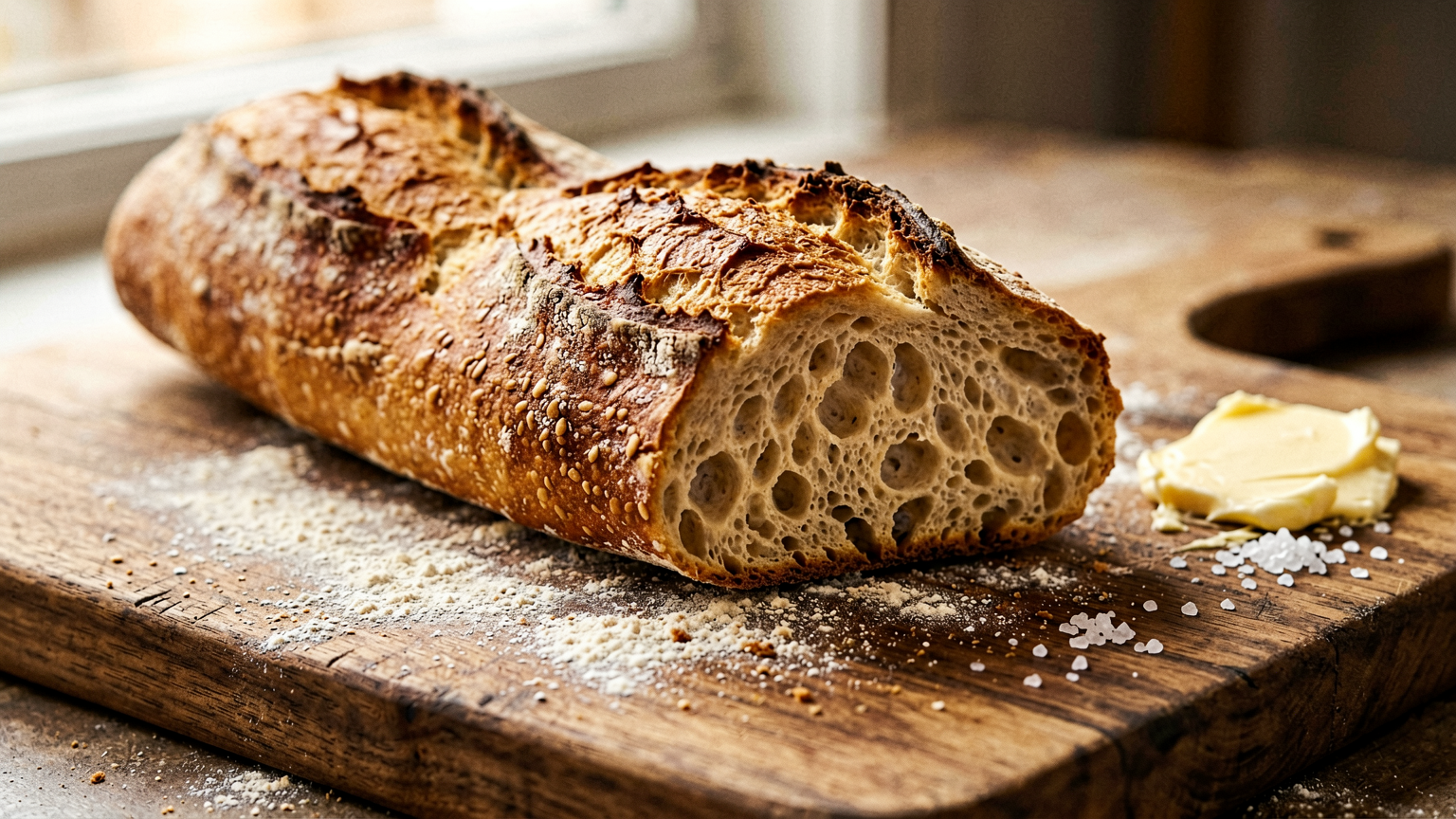
Mastering the Art: The Ultimate Sourdough Baguette Recipe
Ingredients
Method
- **Feed Your Starter:** Ensure your sourdough starter is active and bubbly. Feed it 4-12 hours before you plan to mix your dough, aiming for it to double in volume and pass the float test (a small spoonful floats in water).
- **Mix the Dough:** In a large bowl, combine the active sourdough starter and warm water. Whisk gently to break up the starter. Add the bread flour and mix with your hands or a spatula until just combined and no dry flour remains. Cover and let it rest for 30 minutes (this is the autolyse period).
- **Add Salt & Knead:** Sprinkle the salt over the dough. Wet your hands slightly and work the salt into the dough by pinching and folding for about 5 minutes until it feels more cohesive. The dough will be sticky.
- **Bulk Fermentation with Folds:** Over the next 2-3 hours, perform a series of stretch and folds every 30 minutes. To do this, wet your hands, grab one side of the dough, stretch it upwards, and fold it over the center. Rotate the bowl and repeat for all four sides. This builds strength in the dough. After the folds, let the dough rest, covered, in a warm spot until it has increased in volume by about 50-75%.
- **Pre-shape:** Gently turn the dough out onto a lightly floured surface. Using a bench scraper, gently shape the dough into a rough rectangle and then into a loose log. Let it rest, uncovered, for 20-30 minutes to relax the gluten.
- **Final Shape:** Lightly flour your work surface again. Take the rested dough and gently flatten it into a rectangle. Fold the top third down to the middle and press to seal. Fold the bottom third up and press to seal. Then, fold the dough in half lengthwise and use the heel of your hand to firmly seal the seam. Gently roll the dough back and forth to lengthen it into a baguette shape, about 14-16 inches long. Be careful not to degas the dough too much.
- **Proofing:** Place the shaped baguettes seam-side up on a heavily floured couche (or a floured tea towel) to prevent sticking. Create folds in the fabric to keep the baguettes separate. Cover loosely and let them proof at room temperature for 1-2 hours, or until they look puffy and a gentle poke leaves a slight indentation that slowly springs back. Alternatively, you can proof them in the refrigerator for 8-24 hours for a more developed flavor.
- **Preheat Oven & Prepare for Baking:** About 45 minutes before you plan to bake, place your baking steel or stone on the middle rack of your oven and preheat to 475°F (245°C). Prepare a baking sheet with parchment paper or a pizza peel dusted with cornmeal or semolina.
- **Bake the Baguettes:** Carefully flip the proofed baguettes onto your prepared baking sheet or peel. Using a sharp knife or razor blade (lame), make 3-5 quick, decisive diagonal slashes (scores) on the top of each baguette. Carefully slide the baguettes onto the preheated baking steel or stone. Add about 1 cup of hot water to a shallow pan placed on the bottom rack of the oven to create steam (this is crucial for a crispy crust).
- **Baking Time:** Bake for 10 minutes with steam. Then, carefully remove the steaming pan and reduce the oven temperature to 450°F (230°C). Continue baking for another 15-20 minutes, or until the baguettes are deeply golden brown and sound hollow when tapped on the bottom.