Introduction
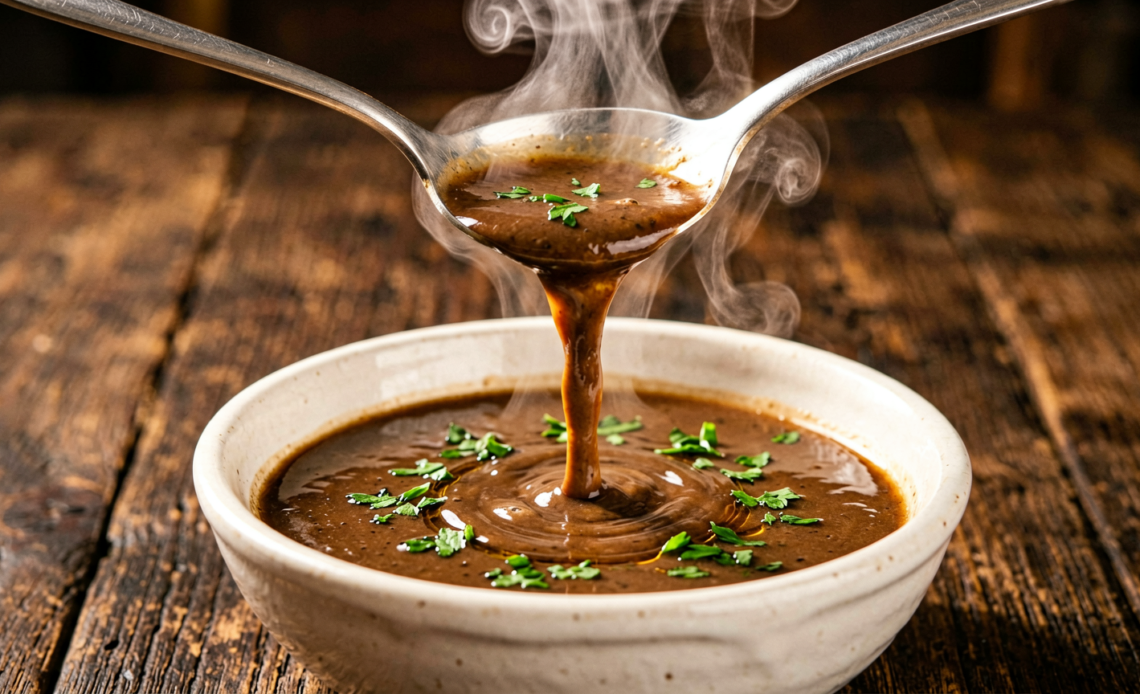
Ah, the holidays. The scent of roasting turkey, the crackle of the fire, and that unmistakable, soul-warming aroma of homemade gravy. But what truly elevates a gravy from good to unforgettable? Giblets, my friends! Often overlooked, the giblets are the secret weapon to a deeply flavorful, rich, and utterly delicious gravy that will have everyone asking for seconds. Forget those bland, store-bought packets; this giblet gravy recipe is surprisingly simple and delivers a taste of pure comfort.
Recommended Kitchen Tools
To make this recipe easier and more efficient, here are some tools I recommend:
-
Fine Mesh Sieve
Check Price on Amazon →
-
Whisk
Check Price on Amazon →
-
Saucepan
Check Price on Amazon →
Why You’ll Love This Recipe
This giblet gravy recipe is a game-changer for any meal. It transforms simple drippings into a luxurious sauce bursting with savory depth. It’s incredibly easy to make, uses parts of the turkey you might otherwise discard, and the resulting flavor is unparalleled. Perfect for Thanksgiving, Christmas, or any Sunday roast, it’s the kind of gravy that makes the whole meal sing.
Ingredients
- 1 set of turkey giblets (heart, liver, gizzard, neck)
- 6 cups chicken or turkey broth, divided
- 1 medium onion, quartered
- 2-3 celery stalks, roughly chopped
- 2-3 sprigs fresh parsley
- 1 bay leaf
- 1/4 cup unsalted butter
- 1/4 cup all-purpose flour
- Salt, to taste
- Freshly ground black pepper, to taste
Instructions
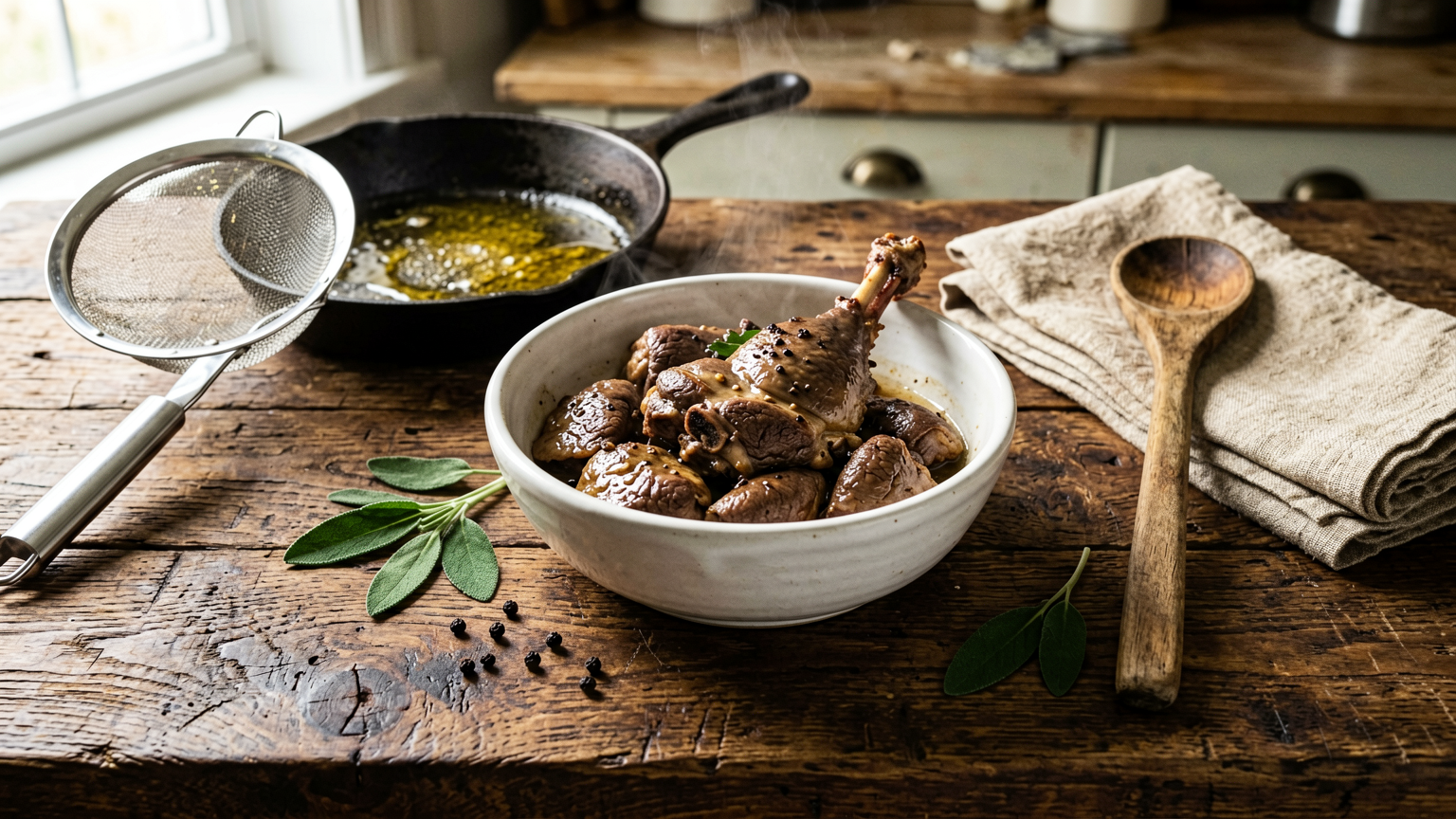
- First, prepare the giblet broth. Rinse the giblets and neck under cold water. Place them in a medium saucepan along with the quartered onion, chopped celery, parsley sprigs, bay leaf, and 4 cups of chicken or turkey broth. Bring to a boil, then reduce heat, cover, and simmer gently for at least 1 hour, or until the neck meat is tender. Skim off any foam that rises to the surface during simmering.
- Once the broth has simmered, carefully strain it through a fine-mesh sieve into a clean bowl or another pot. Discard the solids (giblets, neck, vegetables, bay leaf). You should have about 4-5 cups of rich giblet broth. If you have less, you can top it up with additional broth or water.
- While the broth is still warm, you can optionally finely mince the cooked heart and gizzard if you like to include them in your final gravy. The liver can be a bit strong for some, so it’s often best to discard it after making the broth, but this is up to personal preference.
- In a separate saucepan, melt the butter over medium heat. Once melted, whisk in the flour to create a roux. Cook, whisking constantly, for about 2-3 minutes until the roux is lightly golden and smells nutty. This step is crucial for thickening the gravy and removing the raw flour taste.
- Gradually whisk in the strained giblet broth, about a cup at a time, ensuring it’s fully incorporated and smooth before adding more. Bring the mixture to a simmer, whisking frequently.
- Continue to simmer the gravy, stirring often, for about 10-15 minutes, or until it has thickened to your desired consistency. If it becomes too thick, thin it with a little more broth or warm water. If it’s too thin, you can make a slurry with a tablespoon of cornstarch and a tablespoon of cold water, whisk it in, and simmer for another minute until thickened.
- Season the gravy generously with salt and freshly ground black pepper to taste. Remember to taste as you go! If you’ve included the minced giblets, stir them in now.
- Serve hot and enjoy the incredible flavor!
Tips
- For an even richer flavor, use the neck bone to make a separate, concentrated stock before starting the gravy.
- Don’t skip the roux! Cooking the flour and butter together is key to a smooth, lump-free gravy.
- Taste and season as you go. Giblets can vary in saltiness, and broth can be low in sodium, so adjust accordingly.
- If you don’t have turkey giblets, chicken giblets can be used, though the flavor will be slightly less intense.
- For a smoother gravy, ensure you strain the broth very well. A cheesecloth-lined sieve can also be used for extra clarity.
Serving Suggestions
- Absolutely perfect spooned over mashed potatoes.
- Drizzle generously over carved turkey or roasted chicken.
- A must-have for stuffing and dressing.
- Delicious with biscuits or cornbread.
Storage Tips
Allow the gravy to cool completely. Store in an airtight container in the refrigerator for up to 3-4 days. Reheat gently on the stovetop over low heat, whisking frequently, adding a splash of broth or water if it has thickened too much.
FAQ
Can I make giblet gravy without turkey giblets?
Yes, chicken giblets can be used. The flavor will be similar but slightly less robust.
How do I make my gravy lump-free?
Whisk the broth in gradually to the roux, and continue whisking frequently as it simmers. Straining the initial broth is also very important.
Can I freeze giblet gravy?
Yes, giblet gravy freezes well. Let it cool completely, store in an airtight container, and freeze for up to 2-3 months. Thaw in the refrigerator and reheat gently.
Nutrition Information
- Calories: 150 kcal
- Protein: 8 g
- Fat: 10 g
- Carbohydrates: 7 g
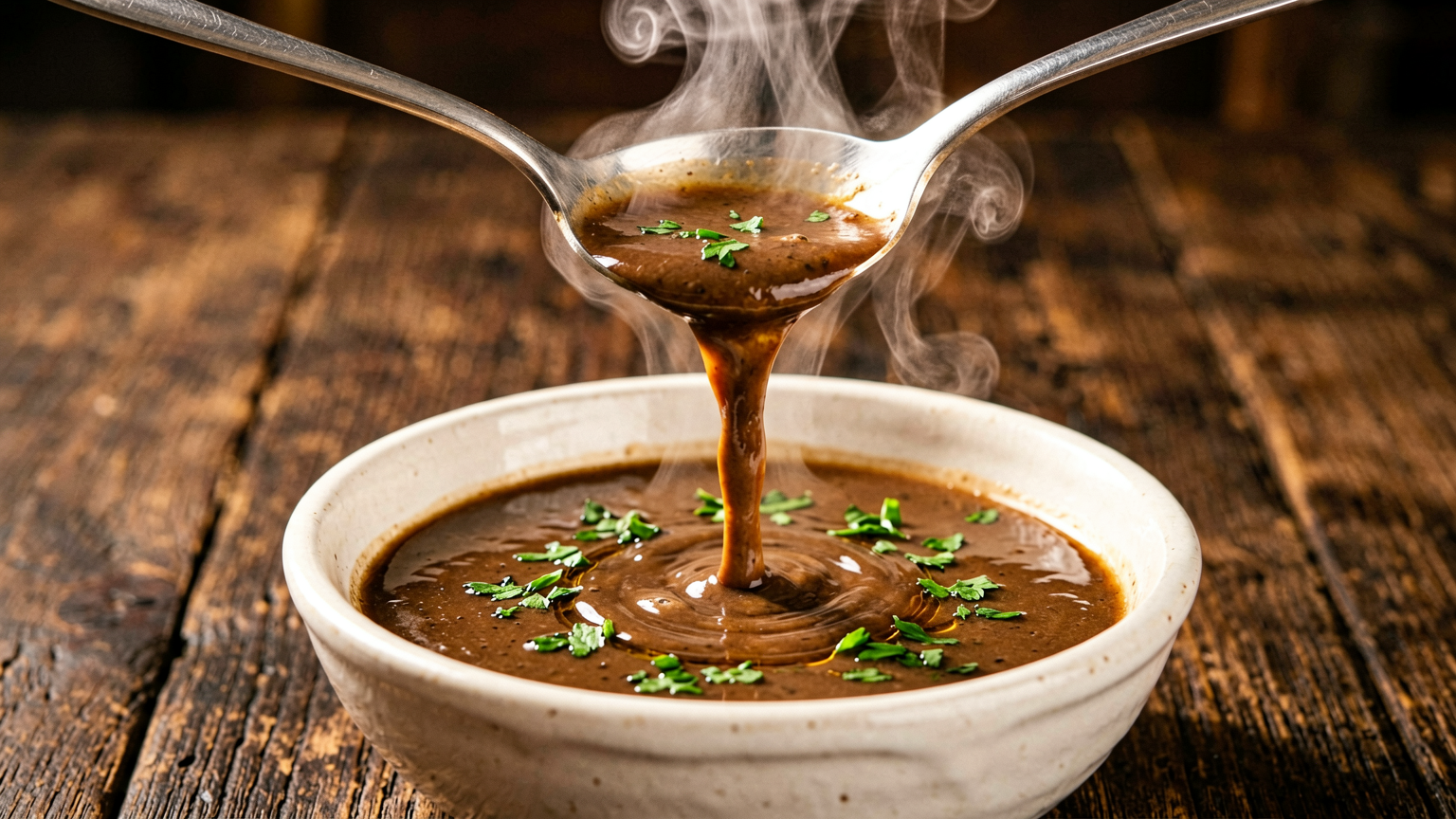
The Ultimate Giblet Gravy Recipe: Rich, Flavorful, and Easy!
Ingredients
Method
- First, prepare the giblet broth. Rinse the giblets and neck under cold water. Place them in a medium saucepan along with the quartered onion, chopped celery, parsley sprigs, bay leaf, and 4 cups of chicken or turkey broth. Bring to a boil, then reduce heat, cover, and simmer gently for at least 1 hour, or until the neck meat is tender. Skim off any foam that rises to the surface during simmering.
- Once the broth has simmered, carefully strain it through a fine-mesh sieve into a clean bowl or another pot. Discard the solids (giblets, neck, vegetables, bay leaf). You should have about 4-5 cups of rich giblet broth. If you have less, you can top it up with additional broth or water.
- While the broth is still warm, you can optionally finely mince the cooked heart and gizzard if you like to include them in your final gravy. The liver can be a bit strong for some, so it's often best to discard it after making the broth, but this is up to personal preference.
- In a separate saucepan, melt the butter over medium heat. Once melted, whisk in the flour to create a roux. Cook, whisking constantly, for about 2-3 minutes until the roux is lightly golden and smells nutty. This step is crucial for thickening the gravy and removing the raw flour taste.
- Gradually whisk in the strained giblet broth, about a cup at a time, ensuring it's fully incorporated and smooth before adding more. Bring the mixture to a simmer, whisking frequently.
- Continue to simmer the gravy, stirring often, for about 10-15 minutes, or until it has thickened to your desired consistency. If it becomes too thick, thin it with a little more broth or warm water. If it's too thin, you can make a slurry with a tablespoon of cornstarch and a tablespoon of cold water, whisk it in, and simmer for another minute until thickened.
- Season the gravy generously with salt and freshly ground black pepper to taste. Remember to taste as you go! If you've included the minced giblets, stir them in now.
- Serve hot and enjoy the incredible flavor!