Introduction
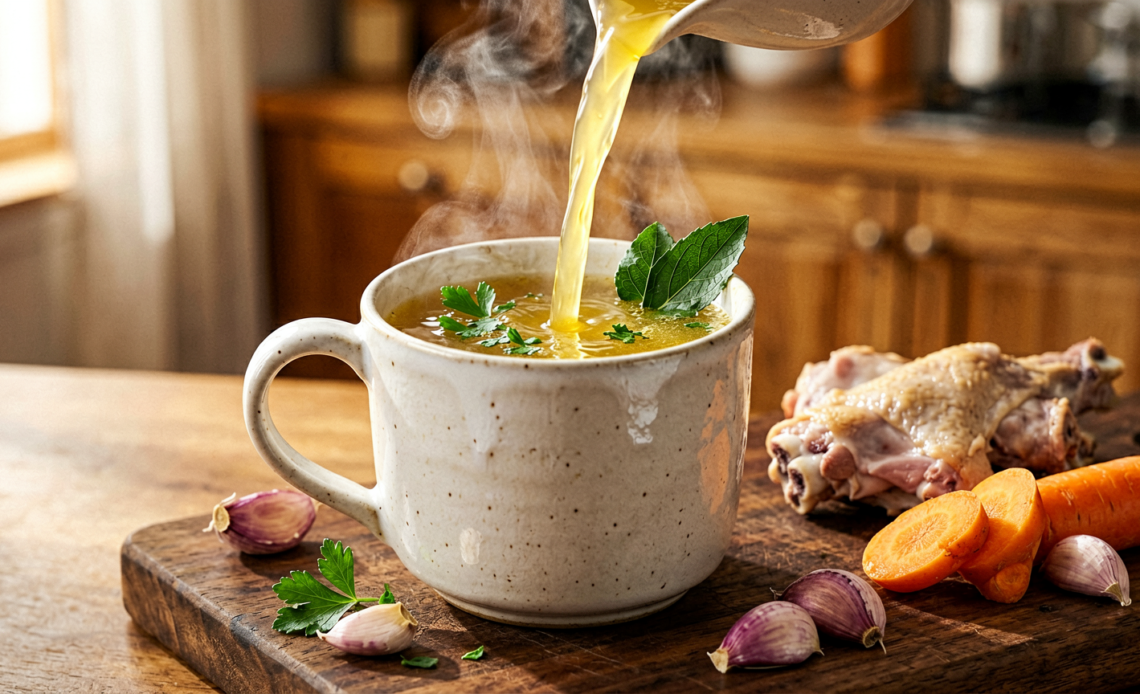
Forget those watery, bland store-bought broths! If you’re serious about elevating your cooking, from comforting soups to rich gravies and savory sauces, then mastering homemade chicken broth is your golden ticket. This recipe is incredibly simple, surprisingly rewarding, and the foundation for countless delicious dishes. Get ready to transform your kitchen into a flavor powerhouse!
Recommended Kitchen Tools
To make this recipe easier and more efficient, here are some tools I recommend:
-
Large Stockpot
Check Price on Amazon →
-
Fine-Mesh Strainer
Check Price on Amazon →
-
Sharp Chef’s Knife
Check Price on Amazon →
Why You’ll Love This Recipe
This chicken broth recipe is a game-changer for any home cook. It’s incredibly budget-friendly, allowing you to utilize leftover bones and vegetable scraps. Plus, you have complete control over the ingredients, ensuring a pure, additive-free liquid gold. The depth of flavor it adds to dishes is unparalleled, making everything from a simple noodle soup to a complex risotto sing.
Ingredients
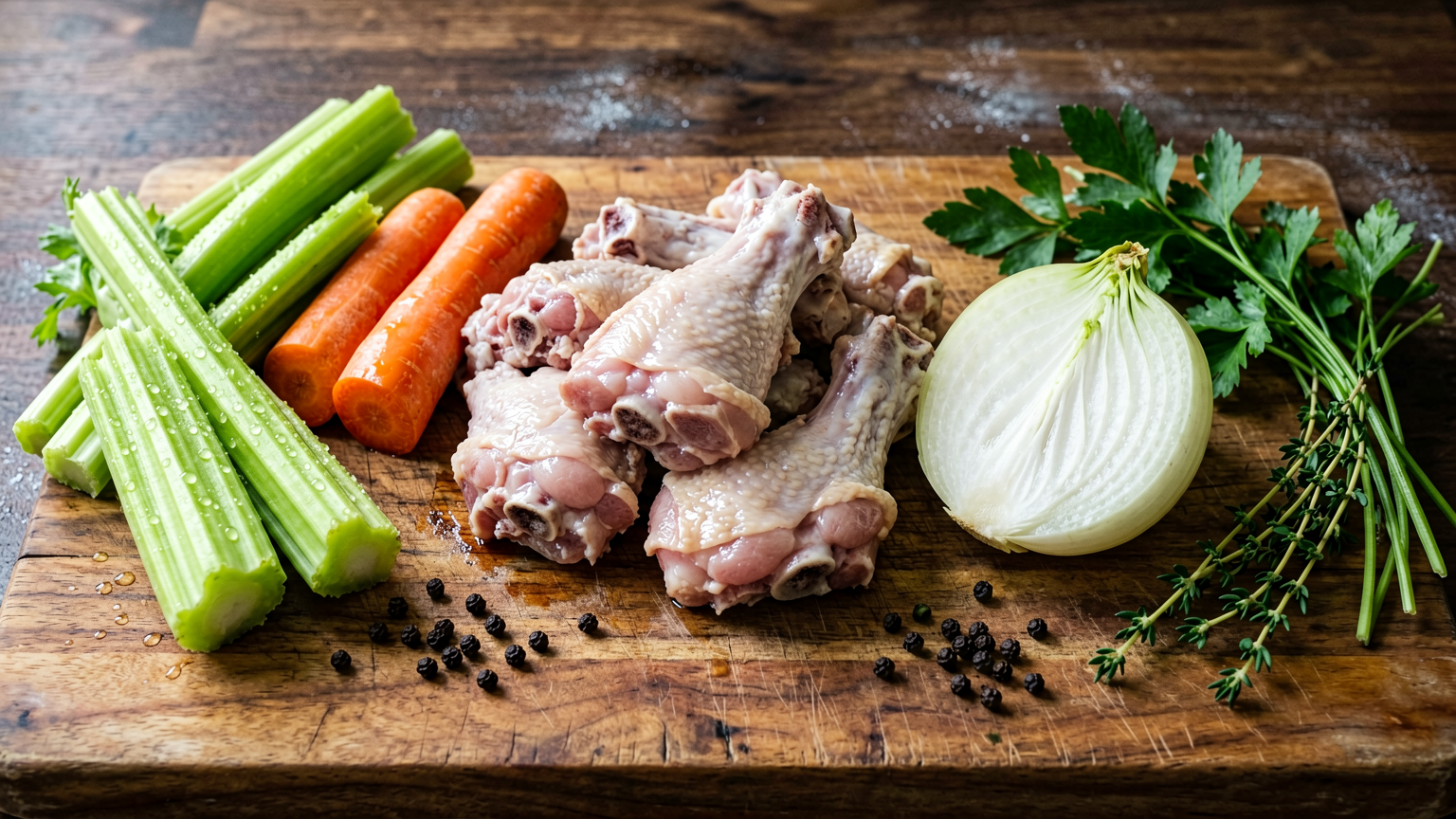
- 3-4 pounds chicken bones (backs, necks, wings, or a whole carcass from a roasted chicken)
- 1 large onion, quartered (peel on for color)
- 2-3 carrots, roughly chopped
- 2-3 celery stalks, roughly chopped
- 4-6 sprigs fresh parsley
- 1-2 sprigs fresh thyme
- 1 bay leaf
- 1 teaspoon whole black peppercorns
- 8-10 cups cold water (or enough to cover ingredients)
Instructions
- Preheat your oven to 400°F (200°C). If using raw chicken bones, spread them on a baking sheet and roast for 25-30 minutes, until nicely browned. This step is crucial for developing a rich, deep flavor and color. If using bones from a roasted chicken, you can skip this step.
- Transfer the roasted bones (if applicable) to a large stockpot. Add the quartered onion, chopped carrots, chopped celery, parsley sprigs, thyme sprigs, bay leaf, and black peppercorns.
- Pour in enough cold water to cover all the ingredients by about 1-2 inches. Starting with cold water helps to gradually draw out impurities and flavors.
- Bring the pot to a boil over high heat. Once boiling, immediately reduce the heat to low, so the liquid is just gently simmering. Skim off any foam or impurities that rise to the surface during the first hour of simmering.
- Cover the pot partially, leaving a small gap for steam to escape, and let it simmer gently for at least 4 hours, or up to 8 hours for a more concentrated flavor. Avoid a rolling boil, as this can make the broth cloudy.
- Once simmering is complete, carefully strain the broth through a fine-mesh sieve set over a large bowl or another pot. Discard the solids. For an even clearer broth, you can line the sieve with cheesecloth.
- Allow the broth to cool slightly, then you can use it immediately, or let it cool completely before storing. Once chilled, you can easily skim off any solidified fat from the surface if desired.
Tips
- Don’t wash your bones before roasting; the browned bits are packed with flavor.
- Using vegetable scraps like onion peels, carrot tops, and celery ends can add extra flavor and color.
- For a darker broth, add a few mushroom stems or a small piece of kombu during the last hour of simmering.
- Adjust simmering time to your preference: shorter for a lighter broth, longer for a richer, more concentrated flavor.
- Taste and adjust seasoning (salt) only after the broth has reduced to your desired consistency, as the flavor will concentrate.
Serving Suggestions
- Use as a base for chicken noodle soup, vegetable soup, or French onion soup.
- Incorporate into risottos, paellas, or other rice dishes for added depth.
- Deglaze pans after searing meats or vegetables.
- Simmer grains like quinoa or rice in broth instead of water.
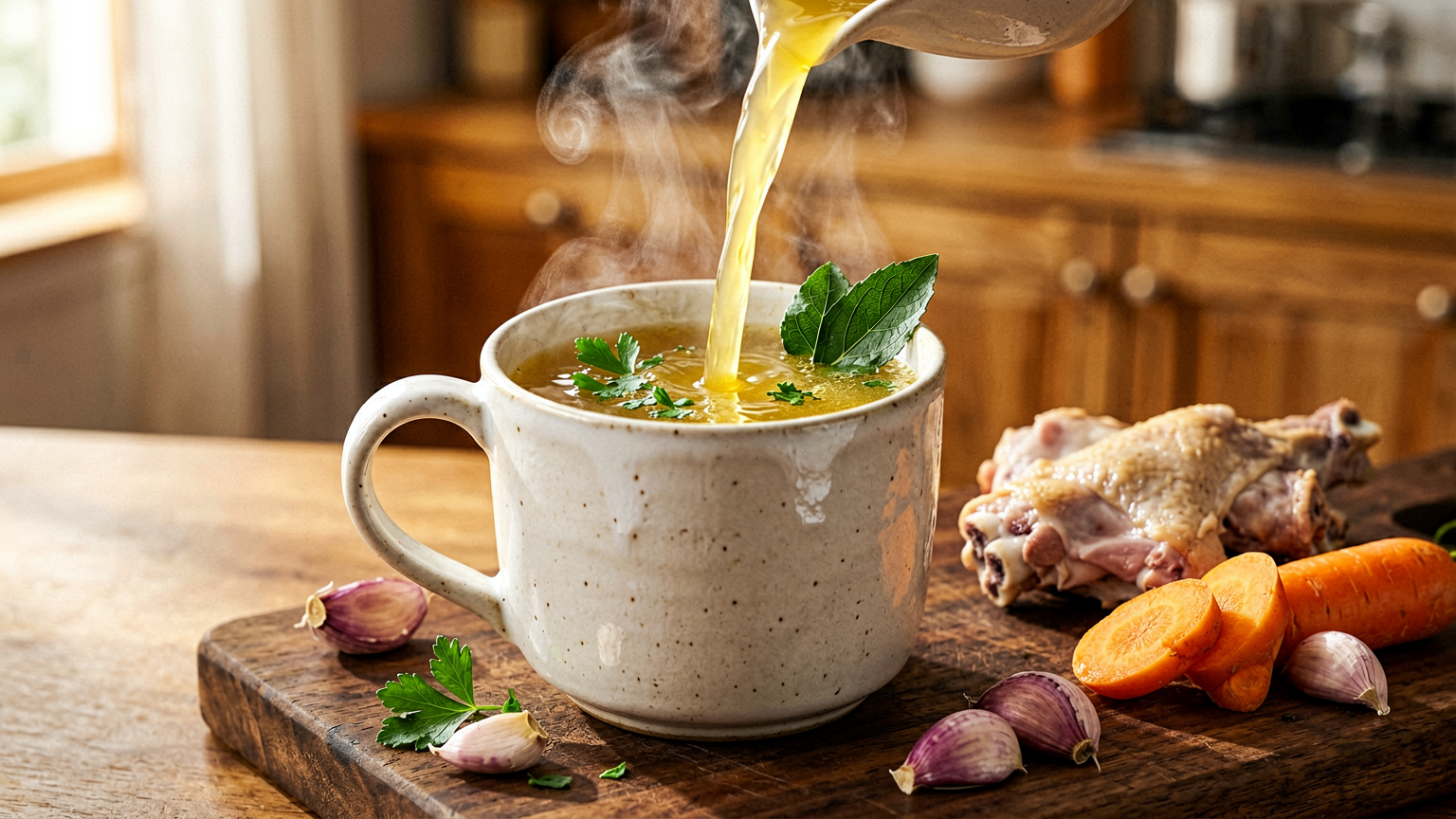
- Enjoy a warm mug of broth on its own as a light, nourishing drink.
Storage Tips
Cooled broth can be stored in airtight containers in the refrigerator for up to 4 days. For longer storage, freeze the broth in ice cube trays for small portions, or in freezer-safe containers or bags for up to 6 months. You can also reduce it further by simmering it down to a more concentrated base before freezing.
FAQ
How long does homemade chicken broth last?
Homemade chicken broth can be stored in the refrigerator for up to 4 days or frozen for up to 6 months.
Can I use a whole chicken to make broth?
Yes, you can use a whole chicken, but it will yield a richer, meatier broth. You may want to remove most of the meat after cooking and before straining.
Why is my chicken broth cloudy?
Cloudy broth is usually caused by boiling too vigorously. Ensure you maintain a gentle simmer and skim off impurities regularly.
Nutrition Information
- Calories: 15-30 kcal per cup (approximate, depending on fat content)
- Protein: 2-4g per cup (approximate)
- Fat: 0.5-2g per cup (approximate, can be reduced by skimming)
- Carbohydrates: 1-2g per cup (approximate)
Homemade Chicken Broth Recipe: The Secret to Flavorful Soups & More!
Ingredients
Method
- Preheat your oven to 400°F (200°C). If using raw chicken bones, spread them on a baking sheet and roast for 25-30 minutes, until nicely browned. This step is crucial for developing a rich, deep flavor and color. If using bones from a roasted chicken, you can skip this step.
- Transfer the roasted bones (if applicable) to a large stockpot. Add the quartered onion, chopped carrots, chopped celery, parsley sprigs, thyme sprigs, bay leaf, and black peppercorns.
- Pour in enough cold water to cover all the ingredients by about 1-2 inches. Starting with cold water helps to gradually draw out impurities and flavors.
- Bring the pot to a boil over high heat. Once boiling, immediately reduce the heat to low, so the liquid is just gently simmering. Skim off any foam or impurities that rise to the surface during the first hour of simmering.
- Cover the pot partially, leaving a small gap for steam to escape, and let it simmer gently for at least 4 hours, or up to 8 hours for a more concentrated flavor. Avoid a rolling boil, as this can make the broth cloudy.
- Once simmering is complete, carefully strain the broth through a fine-mesh sieve set over a large bowl or another pot. Discard the solids. For an even clearer broth, you can line the sieve with cheesecloth.
- Allow the broth to cool slightly, then you can use it immediately, or let it cool completely before storing. Once chilled, you can easily skim off any solidified fat from the surface if desired.